If someone ever asked me what the thing that I find the hardest when cooking is, my answer would without doubt be pastry. Specifically, shortcrust pastry. It always looks so effortless on the telly, when the beaming cook rolls out perfect, impossibly thin sheets, before casually lining their tin with the utmost precision. “Who needs to buy shortcrust pastry when it’s such a doddle?” they ask. They’ve clearly never experienced the crushing devastation of too-short pastry crumbling away at the merest suggestion of a rolling pin. The bottomless crevasses that appear from nowhere after blind baking. Or the brittle walls collapsing at the crucial moment of leaving the tin, spilling the filling to merge with the river of frustrated tears. Thankfully, practice (and a solid, reliable recipe) makes perfect, and after making pastry a few times recently, I decided it was time to cook something for this blog.

However, I deserve absolutely no credit for the pastry itself. The recipe that I used is broadly based on Felicty Cloake’s version that she used to make her Perfect Custard Tart with. I always find her column brilliant when approaching new recipes or needing inspiration, and so far the pastry has worked every time. It’s even got to the point where I no longer dread getting the rolling pin out.
Adding brown butter to puddings and desserts seems to be very popular in London restaurants at the moment. But unlike a lot of trends and fads, it well and truly lives up to the hype. By cooking the butter until it is almost maple syrup in colour, a deep, rich and mellow flavour is released, which works as wonderfully with sweet things as it does with a piece of turbot. I will definitely be experimenting further with this, as I love the sound of other desserts to which it has been added; custard tarts, ice cream, icing etc.
Although making pastry was largely stress-free this time, there still managed to be a kitchen cock-up whilst testing this recipe. I wanted to make a crème fraiche ice cream to accompany the tart, but midway through churning, with a foul smell, the machine abruptly decided to overheat and refused to play anymore. So good old crème fraiche, straight out of the tub, came to the rescue. And after all of that faff, I’m not sure that the frozen version was even missed.
Serves 8-10
Ingredients:
For the pastry:
225g plain flour
115g cold butter
85g caster sugar
3 egg yolks, plus 1 whole egg for brushing
For the filling:
300g unsalted butter
300g caster sugar
300g ground almonds
3 medium eggs
1 lemon, zest only
For the rhubarb:
4-5 sticks of rhubarb, trimmed and sliced into bite-sized pieces
2 tbsp of caster sugar
1 vanilla pod
To finish:
Crème fraiche
Start by making the pastry. Using your hands, rub the butter and flour together in a mixing bowl, until all of the butter has been incorporated and the mixture resembles coarse breadcrumbs. Stir in the sugar, then the egg yolks. Work everything lightly until a dough is formed, then flatten slightly and wrap with cling film. Refrigerate for 1 hour 30 minutes to rest.
Use greaseproof paper to line the base and sides of a deep 9” tin with a loose base. Roll out the rested pastry on a lightly floured surface, then transfer to the tin. Patch any cracks, and use a spare piece of pastry to carefully edge the pastry into the corners. Leave the pastry overhanging the top of the tin. Wrap loosely with cling film and chill in the freezer for a further hour.
Preheat the oven to 180⁰C (160⁰C Fan).
Prick the base of the tart with a fork, then cover with a sheet of greaseproof paper and fill with baking beans. Blind bake for 20 minutes, until golden brown around the sides. Remove the beans and paper, then return to the oven for a further 5 minutes. Crack the remaining egg into a bowl and beat with a fork. Brush the base and sides of the tart with some of the egg, then cook for a minute. Remove the shell from the oven and allow to cool slightly.
Lower the oven temperature to 150⁰C (130⁰C Fan).
Measure out the sugar and the almonds and combine in a mixing bowl. Tip the butter for the filling into a saucepan and melt at a medium-high temperature. When the butter bubbles away and turns nut brown in colour, take it off the heat and pour into the almond mixture, stirring well with a wooden spoon. Beat in the eggs one at a time, until emulsified. Spoon the mixture into the pastry shell, it should leave a gap of about 1.5cm at the top. Gently slide the tart onto the middle shelf of the oven and bake for 1 hour 15 minutes, or until the filling has just set. Allow to cool slightly before carefully removing from the tin and slicing.
While the tart is cooking, add the rhubarb to a large frying pan along with the halved vanilla pod, the sugar and a splash of water. Bring up to a medium-low temperature, then cook for 10-15 minutes, stirring occasionally, until the rhubarb has softened. Allow to cool.
Serve slices of the tart with some of the stewed rhubarb and juices. Finish with a generous dollop of crème fraiche.
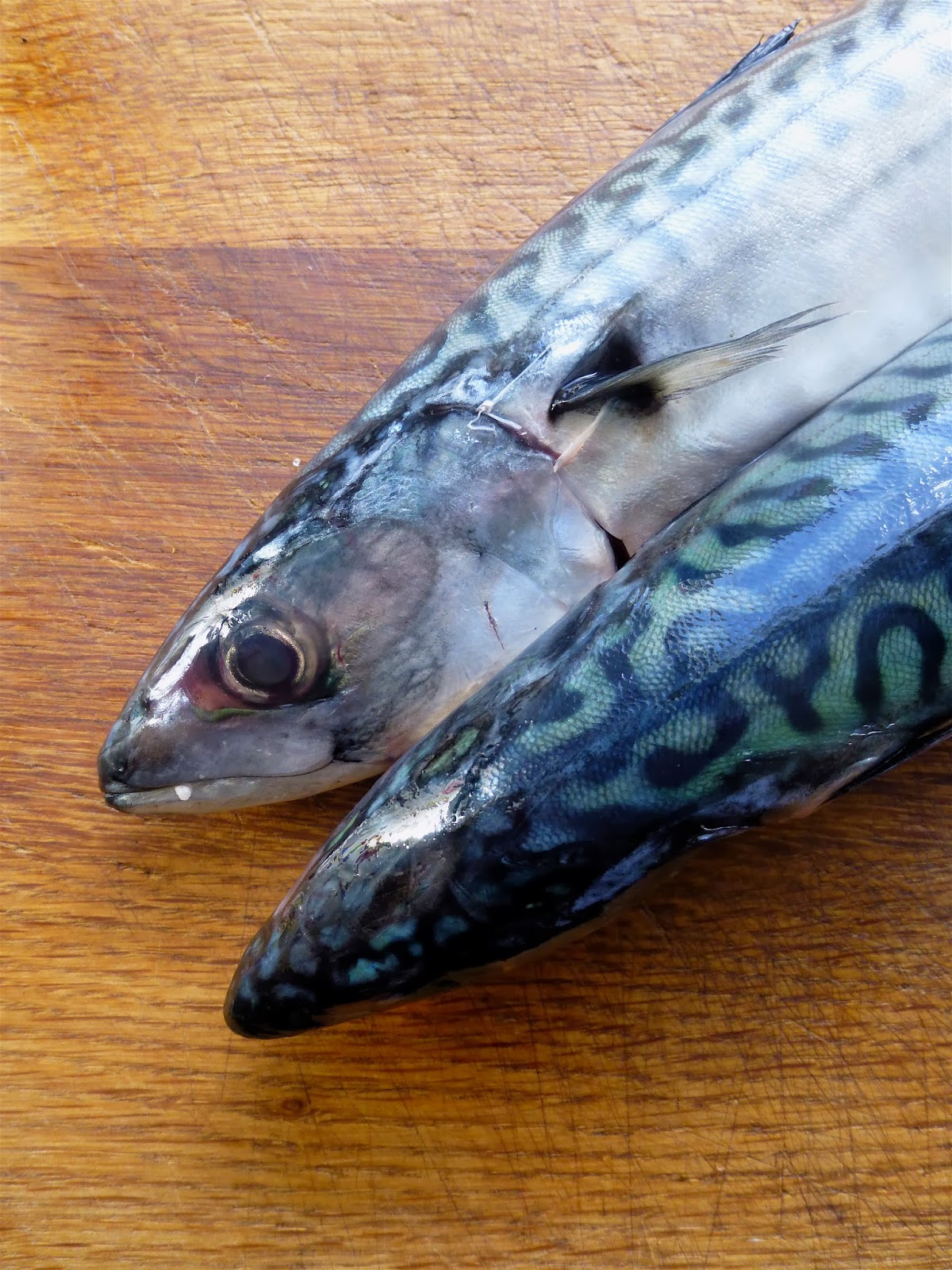
I cook with mackerel quite a lot, and regular readers will know that I have covered it in various guises in this blog before. However it has been a fair while since its last appearance, so it’s about time that this amazing fish is top of the page again. Every week that I write, in fact every time I cook, I learn something new, and I am constantly looking back on how to improve things that I have made before. My mind is always whirring away trying to work out flavour combinations or complete a long list of initial ideas that just require one or two things to tie them together. So I guess that this is an update on a mackerel and beetroot recipe that I posted last January, but slightly more refined and a damn sight prettier.

We are now nearing the end of the mackerel season as they group up to spawn in the spring, but soon it’ll be summer again when there’s nothing better than flashing it on the barbeque with capers, lemon and parsley. Though the beauty is in its versatility, and as the year moves into Autumn it is just as comfortable with crunchy raw root vegetables or spicy broths, then back around to now where the season happily coincides with those new shoots of vibrant red rhubarb from the Yorkshire triangle. I am always so shocked at how bad the supermarkets are in reacting to British seasonality, and this vegetable is a fine example. Despite proper forced rhubarb only being around for a short few of months, I was saddened to still see thin and bendy imports lining the shelves. As usual, my local greengrocers knew better and I was soon walking home with a happy bunch poking out the top of my bag. Rhubarb is good for more than crumble alone (although buy extra for that too) and finely compliments savoury things like oily fish and pork. The key is in the balance, you want to keep the tartness or your main will think it’s a dessert.
I’m still amazed by how easy it is to hot smoke things at home. I was initially worried that my flat would be filled with clouds of black smoke, but even the crumbly old extraction and a few open windows miraculously contained everything in my tiny kitchen. So far I’ve only really tried it with fish that cook quickly using bungled smoke combinations of rice, herbs and zest, but the results really are great. The fish ends up meltingly moist with just the right amount of smokiness. Oh how I yearn to have a garden to expand on these projects…
There are quite a few processes in this recipe but as with most things loads can be done in advance. It’s really up to you how far you take it, and the flavourings still work perfectly if you were to cook all of the mackerel just the one way. Likewise, I have perhaps been a little fancy in just using the loins of the fish here, but in no way were the trimmings wasted. Quickly grilled and crammed between soft white bread with tartar sauce they were delightful. But the whole fillets can also be used throughout this recipe too, especially if you wanted to bulk it out a bit.
Serves 2 for a starter or light lunch.
Ingredients:
For the pan-fried mackerel:
2 mackerel fillets, top loin only, pin boned
Olive oil
½ a lemon, juice only
For the smoked mackerel:
2 mackerel fillets, top loin only, pin boned
Olive oil
1 handful of rice
1 lemon, zest only
½ a bunch of thyme
1tsp black peppercorns
1tsp brown sugar
For the cured mackerel:
2 mackerel fillets, top loin only, pin boned
100g salt
50g caster sugar
1 lemon, zest only
2tbsp fresh thyme leaves
For the rhubarb puree:
1 large stick of rhubarb
½ a lemon, juice only
2 tbsp caster sugar, plus more to taste
For the watercress oil:
50g watercress
100ml extra virgin olive oil
For the beetroot crisps:
1 golden beetroot
Vegetable oil for frying, approx. 1ltr
For the smoked beetroot salt:
3tbsp smoked sea salt
¼ of a beetroot, roughly chopped
To finish:
3tbsp cress, washed
To cure the mackerel, mix together the salt, sugar, lemon zest and thyme. Pour a quarter of this mixture onto the bottom of a small dish or tray and top with the two mackerel loins. Cover with the rest of the salt mix until fully covered. Cover with cling film and refrigerate for two hours.
While the mackerel is curing make the other elements of the dish.
To make the smoked beetroot salt, pour the salt into a small bowl and add the chopped raw beetroot. Mix well and set aside, stirring occasionally. The longer it is left the more the salt will take on colour.
For the rhubarb puree, chop the rhubarb into inch-sized pieces and tip into a small saucepan. Add the lemon juice and sugar and cover with water. Bring to the boil and then simmer for a couple of minutes until cooked through. Drain and transfer to a food processor and blitz well. Taste and add more sugar or lemon if needed, you want it to be quite tart still. Pass through a fine sieve into a bowl and set aside.
Heat the deep frying oil in a heavy saucepan until it reaches 160⁰C. Peel the golden beetroot and carefully slice very thinly with a mandolin. When the oil has come to temperature, fry in small batches until lightly golden and crispy. Drain on kitchen paper and sprinkle with salt.
For the watercress oil, put the watercress, extra virgin olive oil and a little salt into a food processor and blitz until the leaves are finely chopped and the oil has taken on a vivid green colour. Pass through a fine sieve and transfer to a bottle.
When the mackerel has had its curing time, remove from the fridge and lift the fillets out of the salt. Rinse well and pat dry. Carefully slice the skin off and then set aside to come to room temperature.
To make a DIY hot smoker, tip the rice, sugar, thyme, peppercorns and lemon zest into the bottom of a small deep metal oven tray that has been lined with foil. Start the smoking process off by singing everything with a blow torch. Place an oiled metal cooling rack or other grill on top and then seal with more foil. Put the tray over a medium heat until lots of smoke and heat is generated inside. Season the mackerel fillets and rub with oil. Peel back the foil and place the fillets skin-down onto the hot rack, then seal again quickly. Smoke for 4-5 minutes, or until just cooked through. Keep warm.
Heat a non-stick frying pan with a little olive oil. Season the remaining mackerel fillets well. When a medium-hot temperature, add the fish skin-side down, holding them for a few seconds to stop any shrinkage. Fry for 2 minutes to crisp up the skin, then turn over and remove the pan from the heat and allow to residual heat to finish the cooking off. Squeeze over the lemon juice.
To plate up, lay one of each of the mackerel fillets onto heated plates. Dot the puree and the oil around the fish and scatter over the beetroot crisps and the cress. Finally sprinkle over some of the smoked salt.