Showing posts with label mackerel. Show all posts

Thursday, 13 March 2014

Three ways with mackerel: pan-fried, smoked and cured, with rhubarb puree, beetroot crisps and watercress oil


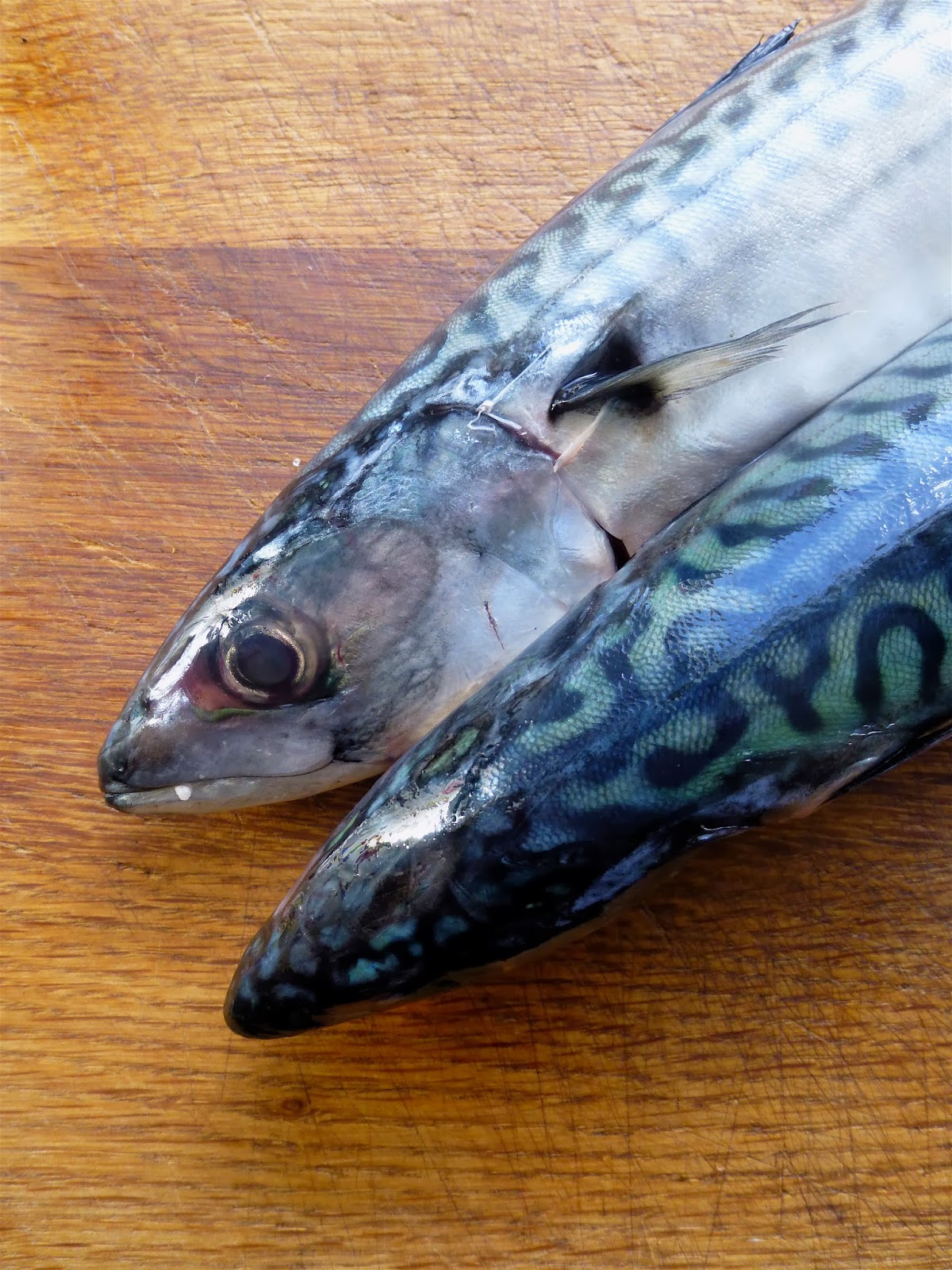
I cook with mackerel quite a lot, and regular readers will know that I have covered it in various guises in this blog before. However it has been a fair while since its last appearance, so it’s about time that this amazing fish is top of the page again. Every week that I write, in fact every time I cook, I learn something new, and I am constantly looking back on how to improve things that I have made before. My mind is always whirring away trying to work out flavour combinations or complete a long list of initial ideas that just require one or two things to tie them together. So I guess that this is an update on a mackerel and beetroot recipe that I posted last January, but slightly more refined and a damn sight prettier. 


We are now nearing the end of the mackerel season as they group up to spawn in the spring, but soon it’ll be summer again when there’s nothing better than flashing it on the barbeque with capers, lemon and parsley. Though the beauty is in its versatility, and as the year moves into Autumn it is just as comfortable with crunchy raw root vegetables or spicy broths, then back around to now where the season happily coincides with those new shoots of vibrant red rhubarb from the Yorkshire triangle. I am always so shocked at how bad the supermarkets are in reacting to British seasonality, and this vegetable is a fine example. Despite proper forced rhubarb only being around for a short few of months, I was saddened to still see thin and bendy imports lining the shelves. As usual, my local greengrocers knew better and I was soon walking home with a happy bunch poking out the top of my bag. Rhubarb is good for more than crumble alone (although buy extra for that too) and finely compliments savoury things like oily fish and pork. The key is in the balance, you want to keep the tartness or your main will think it’s a dessert.
   
I’m still amazed by how easy it is to hot smoke things at home. I was initially worried that my flat would be filled with clouds of black smoke, but even the crumbly old extraction and a few open windows miraculously contained everything in my tiny kitchen. So far I’ve only really tried it with fish that cook quickly using bungled smoke combinations of rice, herbs and zest, but the results really are great. The fish ends up meltingly moist with just the right amount of smokiness. Oh how I yearn to have a garden to expand on these projects…  

There are quite a few processes in this recipe but as with most things loads can be done in advance. It’s really up to you how far you take it, and the flavourings still work perfectly if you were to cook all of the mackerel just the one way. Likewise, I have perhaps been a little fancy in just using the loins of the fish here, but in no way were the trimmings wasted. Quickly grilled and crammed between soft white bread with tartar sauce they were delightful. But the whole fillets can also be used throughout this recipe too, especially if you wanted to bulk it out a bit.  

Serves 2 for a starter or light lunch.  

Ingredients:  

For the pan-fried mackerel:  

2 mackerel fillets, top loin only, pin boned 
Olive oil 
½ a lemon, juice only  

For the smoked mackerel:  

2 mackerel fillets, top loin only, pin boned 
Olive oil 
1 handful of rice 
1 lemon, zest only 
½ a bunch of thyme 
1tsp black peppercorns 
1tsp brown sugar  

For the cured mackerel:  

2 mackerel fillets, top loin only, pin boned 
100g salt 
50g caster sugar 
1 lemon, zest only 
2tbsp fresh thyme leaves  

For the rhubarb puree:  

1 large stick of rhubarb 
½ a lemon, juice only 
2 tbsp caster sugar, plus more to taste  

For the watercress oil:  

50g watercress 
100ml extra virgin olive oil  

For the beetroot crisps:   

1 golden beetroot 
Vegetable oil for frying, approx. 1ltr  

For the smoked beetroot salt:  

3tbsp smoked sea salt 
¼ of a beetroot, roughly chopped  

To finish:  

3tbsp cress, washed 


To cure the mackerel, mix together the salt, sugar, lemon zest and thyme. Pour a quarter of this mixture onto the bottom of a small dish or tray and top with the two mackerel loins. Cover with the rest of the salt mix until fully covered. Cover with cling film and refrigerate for two hours. 


While the mackerel is curing make the other elements of the dish. 

To make the smoked beetroot salt, pour the salt into a small bowl and add the chopped raw beetroot. Mix well and set aside, stirring occasionally. The longer it is left the more the salt will take on colour. 

For the rhubarb puree, chop the rhubarb into inch-sized pieces and tip into a small saucepan. Add the lemon juice and sugar and cover with water. Bring to the boil and then simmer for a couple of minutes until cooked through. Drain and transfer to a food processor and blitz well. Taste and add more sugar or lemon if needed, you want it to be quite tart still. Pass through a fine sieve into a bowl and set aside. 


Heat the deep frying oil in a heavy saucepan until it reaches 160⁰C. Peel the golden beetroot and carefully slice very thinly with a mandolin. When the oil has come to temperature, fry in small batches until lightly golden and crispy. Drain on kitchen paper and sprinkle with salt. 

For the watercress oil, put the watercress, extra virgin olive oil and a little salt into a food processor and blitz until the leaves are finely chopped and the oil has taken on a vivid green colour. Pass through a fine sieve and transfer to a bottle. 

When the mackerel has had its curing time, remove from the fridge and lift the fillets out of the salt. Rinse well and pat dry. Carefully slice the skin off and then set aside to come to room temperature. 


To make a DIY hot smoker, tip the rice, sugar, thyme, peppercorns and lemon zest into the bottom of a small deep metal oven tray that has been lined with foil. Start the smoking process off by singing everything with a blow torch. Place an oiled metal cooling rack or other grill on top and then seal with more foil. Put the tray over a medium heat until lots of smoke and heat is generated inside. Season the mackerel fillets and rub with oil. Peel back the foil and place the fillets skin-down onto the hot rack, then seal again quickly. Smoke for 4-5 minutes, or until just cooked through. Keep warm. 

Heat a non-stick frying pan with a little olive oil. Season the remaining mackerel fillets well. When a medium-hot temperature, add the fish skin-side down, holding them for a few seconds to stop any shrinkage. Fry for 2 minutes to crisp up the skin, then turn over and remove the pan from the heat and allow to residual heat to finish the cooking off. Squeeze over the lemon juice.

To plate up, lay one of each of the mackerel fillets onto heated plates. Dot the puree and the oil around the fish and scatter over the beetroot crisps and the cress. Finally sprinkle over some of the smoked salt.

Monday, 30 July 2012

Mackerel stuffed with salsa verde served with pea puree, samphire, clams and chargrilled cucumber


This was one of the first proper things that I ever learned to cook, and the first time that I really appreciated how nice mackerel is. It is based on an old Hugh Fearnley Whittingstall recipe that appeared in the Guardian Weekend supplement for mackerel stuffed with salsa verde, but over the years I have tweaked the ingredients and turned it into a complete plate of food. Once practiced it is really easy to cook, and is great if cooking for a large amount of people as the main elements can be prepared well in advance.


Salsa verde is such a great accompaniment to so many things. It’s a sharp, strong sauce that is amazing with steak, lamb, fish (particularly oily fish), or with potatoes or steamed greens. I personally could just eat it out of the bowl with a spoon! You can tailor it to just how you like it by changing the herbs around, adding more lemons or mustard etc. until it’s just right. With this dish it balances so well with the oily mackerel and the sweetness of the pea puree. 
Everyone that I’ve told about the grilled cucumber looks at me with a confused and bizarre expression, and until a few weeks ago I would have agreed. I used to only use cucumbers cold as a salad item or in a tzatziki, but I recently watched Ashley Palmer-Watts on the TV grilling a cucumber and I was intrigued. In this recipe, the chargrilled cucumber adds a refreshing touch to all of the other strong flavours, and helps balance everything out. I will definitely be trying it out with other recipes in the future.
As with all dishes involving fish, try and search out a local fishmonger that will provide you with really fresh fish. They will normally be cheaper and have a far wider selection than the supermarkets, and their survival keeps high streets looking independent and unique. 
Serves 2
Ingredients:
2 mackerel, filleted and pin boned
For the salsa verde:
1 large handful of parsley
3 sprigs basil leaves
3 sprigs mint
2 garlic cloves, finely chopped
1 tbsp capers, rinsed
1 pickled gherkin
2 anchovy fillets
1 tsp english mustard
1 lemon, juice only
1 tbsp white wine vinegar
Extra virgin olive oil,
Salt and pepper
For the pea puree:
300g frozen petit pois
1/2 bunch of mint leaves
1 lemon, juice only
1 knob butter
Salt and pepper
For the rest of the dish:
1/2 cucumber, skin cut off to create 2 3” rectangles
200g samphire, rinsed under cold water
1 lemon
1 knob of butter
Olive oil
15-20 clams
Small glass of white wine
Pre-heat the oven to 200ºC and put a saucepan of salted water on to boil.
First make the salsa verde. Finely chop the herbs together, then add the anchovy, chopped garlic, capers and gherkin and chop everything again, mixing it all together with the knife. When everything is finely chopped and combined, transfer to a bowl and add the mustard, white wine vinegar, lemon juice and seasoning and mix. Finally add enough extra virgin olive oil to create a loose paste. Taste and adjust the vinegar, seasoning and lemon and set aside. 


When the water has boiled add the peas and cook for a couple of minutes until just tender. Be careful not to overcook and lose the colour and flavour! Once cooked, transfer to a food processor with the mint, butter, lemon juice and seasoning. Blend to a smooth puree before tasting and setting aside somewhere warm. You could pass it through a sieve to make it extra fine if you like. 


Lay out the pin-boned mackerel fillets on a chopping board skin-side down, and smear a good amount of the salsa verde down one of the two fillets of each fish. Lay the other fillet on top of the stuffed fillet and tie together with a couple of pieces of butchers twine. Put the mackerel packages aside until ready to cook. 


When you are ready to go, heat up a heavy griddle pan on a medium-high heat, a small saucepan on a medium-high heat and a frying pan on a medium heat. 
Season the mackerel and place on a baking tray lined with greaseproof paper, drizzle with a little olive oil and put in the oven for 8 minutes. 
While the fish is cooking, cook the samphire, the clams and the cucumber at the same time:
Add the butter to the frying pan and saute the samphire for a couple of minutes before adding the lemon juice and seasoning. Keep warm until the fish is ready.
When the saucepan is hot, add the white wine. When it starts to boil add the clams and put the top on the pan, shaking everything a couple of times. After a few minutes check the clams - they should be opening up. If not, replace lid and allow another minute or two. Once cooked take off the heat and keep warm. 
Rub the cucumber rectangles with seasoning and olive oil and place on the hot griddle, turning every minute or so once nicely charred on each side.
To plate up, spoon a good dollop of pea puree on each plate and place the cucumber on top. Position the cooked fish on the cucumber and spoon a bit more salsa verde on top. Surround the fish with the samphire and the clams and serve with a glass of white wine.

Monday, 11 June 2012

Meals for a rainy day


Back to the comfort food...

Well that was a long summer! This rain really is terrible, and has completely scuppered any plans that I had for nice outdoor evening suppers - I’m still yet to have a barbecue this year! So it’s back to nice hearty food that is perfect to come home to after trudging around in the rain. 
In this blog I’ve included a recipes for breakfast, lunch and afternoon tea (or even dessert).   All are quick and simple to prepare, but incredibly satisfying.
Breakfast of champions: Pan-fried mackerel with scrambled eggs on toast 
Sod a full english breakfast, this is what you want on a nice sunday morning with a cup of tea and the papers. It’s traditional to have smoked salmon or kippers for breakfast, but the fresh mackerel keeps the flavours of the dish delicate and balances really well with the creaminess of the eggs. 


Mackerel is a fantastic fish, and one that you will find me using a lot on this blog. It is criminally overlooked in home cooking, with the reputation of being too strongly flavoured and bony. But give me one any day - mackerel is easy to cook and prepare, and a good start if learning how to fillet fish. They are also really cheap and can be bought anywhere, although I hear that their popularity in restaurants is pushing the prices up. I really hope that this isn’t true! For this dish, you can buy mackerel already filleted so that they will only need pin-boning before cooking.
Everyone has their own way of making scrambled eggs, but for me, heating slowly with a dollop of cream and butter until just cooked and oozing over the toast is best. 
Serves 2
Ingredients:
4 mackerel fillets, skin on and pin-boned
1 lemon - juice
2 tbsp vegetable oil
1 knob of butter
Salt and pepper
Parsley to finish
For the scrambled eggs:
6 medium eggs
3 tbsp double cream
Salt and pepper
1 large knob of butter
To finish:
2 large, thick slices of sourdough bread
In a large mixing bowl or jug, crack the eggs and add the double cream and some salt and pepper (you can add more later). Whisk well to combine.
Remove the mackerel fillets from the fridge and dry with kitchen roll, season both sides well.


Heat a medium saucepan on a low heat and add the knob of butter. When melted add the eggs, and keep stirring all the time as they start to thicken up. When the mixture has started to thicken and is about half done, remove the saucepan from the heat and place a non-stick frying pan with the vegetable oil on a medium heat. Keep stirring the eggs, they will still be cooking even off the heat. 
When the frying pan has heated up, add the mackerel fillets skin side down, holding them down for a few seconds at first, and fry for 3 minutes before turning. Cook for another 2 minutes before turning the heat off and adding the butter and lemon juice which will sizzle away and gently finish the cooking of the fish in the residual heat. 
When you turn the fish over, put the saucepan with the eggs back on the heat and finish off - it should still be quite runny and just cooked. Check the seasoning and add more if necessary. At the point of turning the fish also get the sourdough bread toasting. 


To serve, butter the toast and spoon over a good dollop of the scrambled eggs. Top with mackerel fillets, some parsley and some more cracked black pepper. Eat while still hot. 
Lunch time: pea, mint and ham soup
This soup is a classic, and perfect for gloomy rainy days. They can be bought in tubs ready made from any supermarket, but as usual a homemade version is far superior. Most simple soups are often overcomplicated with unnecessary ingredients, this version of the soup is so simple and quick to prepare and all of the main ingredients shine through - you can taste the sweet peas, the salty ham and the zing of mint. I like the soup to remain quite chunky in texture, so I crush about a quarter of the peas instead of blending the whole mixture, but this is optional.


Once cooked, this soup stands well and the flavour of the ham develops the longer it is left. This makes it great for leftovers, although try not to re-heat it too much as the colour will fade and it won’t taste so fresh.
This recipe uses ready sliced ham as it is easiest to purchase, but for amazing results use freshly roasted ham in roughly shredded chunks.
Serves 4 for lunch or 2 for a hearty dinner
Ingredients:
1 tbsp vegetable oil
1 shallot, finely chopped
1 clove of garlic, finely chopped
1 litre good quality chicken stock
1kg frozen peas
1 large bunch mint, leaves picked 
8 slices of good quality ham, roughly torn
1 lemon - juice
salt and pepper
To serve:
Extra virgin olive oil
Crusty break or toast with loads of butter. 
Heat up a large a saucepan with the vegetable oil and slowly cook the chopped shallot and garlic until tender. 
Meanwhile heat the stock up in a separate saucepan until boiling. 
When the garlic and shallots are cooked, add the peas and cover with the hot stock. Bring to the boil and simmer until the peas are cooked. 
Using a slotted spoon or sieve, put 3/4 of the peas into a food processor with the mint and blend until smooth, then pour back into the saucepan with the rest of the soup and mix well. Add the chunks of ham and season, and heat the soup back up until just before boiling. 
Just before serving, add the lemon juice and have one final taste and adjust the seasoning. Spoon into bowls and drizzle a little of the extra virgin olive oil over the top. Serve with the crusty bread on the side. 
Afternoon tea: bakewell tart
Another classic and another simple thing to make, but something that if made carefully is really amazing. The soft almondy filling with sweet jam and crisp pastry work so well together, and is really lovely as an afternoon snack with a cup of tea.


Getting the pastry just right is the key with this. You want it to be short, thin and crisp; if mixed too much and rolled too thickly it will be doughy and undercooked, whilst if rolled too thinly you risk it cracking. Experience is the way to get this right really, and every cook I know has had a nightmare with pastry at some point. As with all baking and pastry, following recipes exactly and cooking with care and patience will produce a better result. With the techniques used, it is also a great stepping stone to making other desserts - good pastry and frangipane filling recipes can be used in many different ways. I have even seen it used to top mince pies with good effect! 
This is my take on the bakewell, traditional recipes won’t have the polenta but I think this gives the frangipane a great texture.
This recipe makes a large tart, but if kept covered it keeps really well and stays moist for 4-5 days.
Serves 8-10
Ingredients:
For the sweet shortcrust pastry:
125g salted butter
100g icing sugar
255g plain flour
2 egg yolks
2 tbsp milk
Pinch of salt
For the frangipane:
275g ground almonds
75g uncooked polenta (quick cook variety)
300g salted butter
300g caster sugar
3 eggs, beaten
1 tsp almond extract
3/4 jar raspberry jam, preferably home made
good handful of sliced almonds, lightly toasted
To serve:
Double cream
Pre-heat the oven to 170ºC (fan oven)
In a food processor, cream together the butter, salt and icing sugar until light in colour and very soft and fluffy. Add the egg yolks, milk and flour and pulse until the mixture starts to look like coarse breadcrumbs. Tip the mixture out onto a lightly floured surface and carefully pat together until just combined. Wrap the ball of dough in clingfilm and put in the fridge to rest for an hour.
In the meantime, grease and line a 28cm flan tin with greaseproof paper, and cut a second  28cm disc of greaseproof paper that you will use to cover the pastry later. 
When the dough has rested, take it out of the fridge and using a sharp knife, cut it into thin slices. Line the base and sides of the tin with these slices and push together with your fingers until the pastry is all joined up and the tin is completely lined. Using a fork, prick the  pastry on the base of the tart all over, this will stop it rising unevenly. Cover the base of the pastry with the spare disc of greaseproof paper and spread baking beans evenly over the top, and put the pastry into the oven for 8 minutes. After 8 minutes, take the pastry out of the oven and carefully remove the baking beans and greaseproof from the top, and put the uncovered pastry back in the oven for another 5 minutes or until the base is a light golden colour. Remove from the oven and allow to cool completely.
Turn the oven down slightly to 160ºC.
While the pastry base is cooling, make the frangipane filling. Put the ground almonds and polenta in a large mixing bowl. In a separate bowl, whisk the butter and sugar until creamed together. Add this, along with the beaten eggs and almond extract to the almonds and polenta and fold until smooth. 
When the pastry shell has cooled down, spoon an even layer of the raspberry jam over the base, then fill to the top with the frangipane mixture. Sprinkle over the toasted sliced almonds and bake in the oven for 35-40 minutes, there should still be a little bit of wobble in the middle. 


Allow to cool slightly before serving with a good dollop of whipped double cream and a cup of tea.