I was recently reading through my Twitter timeline, and a few people were writing about how uninspired they were and how they just couldn’t decide what to cook. This was something that I really related to. It’s similar to writer’s block I guess, sometimes my head ties itself in knots trying to find some creativity, whereas other times it’s almost as if the creativity finds me, and recipes effortlessly churn themselves out. Luckily the latter has been the case recently, my head has been awash with cooking ideas and I’ve got a long list of potential recipes to test and write about in the future. Spring is on the way, and it’s exciting that before long we’ll be seeing wild garlic and early asparagus coming through. The way I eat will also change, those bold, heavy winter flavours shifted for something a little lighter.
It was brilliant to cook with the brill that I have written about for the last few posts. It was a big old fish and I was determined to make it go as far as possible. This also allowed me to experiment a little. Having poached a lovely thick bit of fillet and even eaten the roes, I wanted to try something a bit different with what remained. For this I turned to my bookcase for inspiration. I really enjoy Nathan Outlaw’s cook books; his recipes always put flavour first and I’ve picked up so many little tips from cooking his dishes. I had previously noticed that he recommended curing brill, and with a fair bit of fish left I thought I’d give that a go. It worked a treat, and was much quicker than I anticipated. Not only was it an interesting new way of preparing the brill, it also made it last a few days longer; providing a few handsome snacks after some long and tiring days at work.
I digress, and after a few weeks of blabbering on I promise that that is the last time I’ll mention that brill for a while. But the idea for this recipe derived from that experimentation. Recently we’ve had some astonishingly good gurnard at work, big, triangular-shaped fish all big heads and spikes. Customers are often a little wary of this species as it looks nothing like the salmon or seabass that they are used to, but for value and taste they are up there with the best. Having cooked with gurnard around Christmastime, I wanted to try something a little different, and because of just how fresh the fish were I thought they would also be ideal to cure. Happily they turned out much like the brill; the thick, firm fillets yealding a fresh, sweet taste.
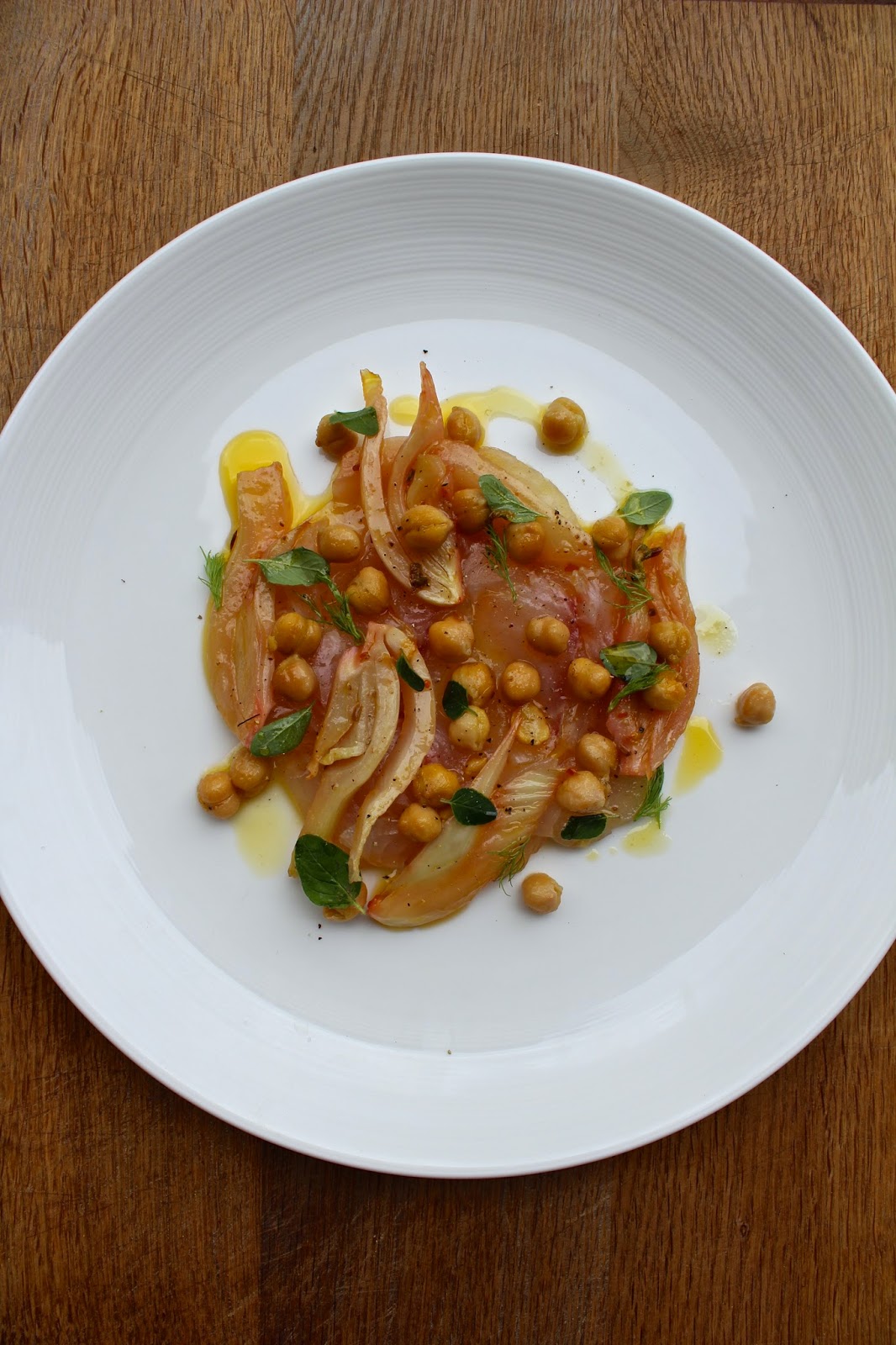
Blood oranges are just coming to the end of their season, and here they provided the perfect sidekick to the gurnard. Combined into almost like a dressing with the fennel and the rapeseed oil, the flavour remained delicate and allowed everything to remain balanced. At this point I felt like the dish needed just one more thing, another texture to round everything off. Here I gained inspiration from another direction. One of the wonderful dishes that I ate recently at Café Murano was a carpaccio, which interestingly came flecked with tiny cannellini beans. This is something that I would never have thought of, but it added another dimension that made the eating all the better. The chickpeas worked in the same way in this dish, and the cooking process was a total revelation. It’s true, anything cooked slowly in good oil with rosemary and garlic is bound to be good, but these were something else. The gentle, lengthy cooking softened the pulses whilst absorbing some of the oil and flavourings. Once allowed to cool and marinate further they really were addictive. I might have eaten another bowl just of them…
Serves 4
Ingredients:
For the fish and cure:
1 very fresh gurnard (about 1kg in size), filleted, skinned and pin-boned
250g salt
250g sugar
2 sprigs of rosemary
The tops of the fennel bulbs
2 blood oranges, zest only
For the fennel and orange:
2 fennel bulbs, sliced
1 tsp fennel seeds
1/2 tsp dried chilli flakes
1 tbsp caster sugar
1 garlic clove
2 blood oranges, juice only
4 sprigs of fresh oregano
4 tbsp rapeseed oil
For the chickpeas:
400g soaked, cooked chickpeas
2 garlic cloves, crushed slightly
3 rosemary sprigs
Extra virgin olive oil
To finish:
Fresh oregano leaves
Any fronds from the fennel
For the cure, put the salt, sugar, fennel stalks, orange zest and rosemary into a food processor and combine until everything is finely chopped. Pour half onto the bottom of a deep dish that is big enough to hold the gurnard fillets. Top with the fish and then cover with the remaining mixture. Cover with cling film and refrigerate for 2.5 hours. Once cured, rinse the fillets clean of the cure and pat dry.
Drain the chickpeas and rinse before pouring into a saucepan. Add the garlic cloves, rosemary and a good amount of seasoning. Pour in enough extra virgin olive oil to nearly cover, then cook on a very low heat for about an hour. Do not let the oil get too hot and start bubbling and frying, you just want a gentle, warm heat. Once cooked, remove from the heat and cool to room temperature.
For the fennel, heat a frying pan to a high temperature and add a little of the rapeseed oil. Fry the fennel, fennel seeds, dried chilli and garlic for about 5 minutes, until starting to caramelise on both sides. Add the sugar, orange juice and oregano and reduce until thick and syrupy. Stir in the rest of the rapeseed oil. Taste and season, then allow to cool.
To plate up, slice the cured gurnard into slithers a couple of millimetres thick. Arrange on the bottom of each plate, then dress with the fennel and oil. Sprinkle over a few drained chickpeas and scatter on more of the fresh oregano leaves and any fennel fronds. Finish with a slight crack of pepper.
With the shellfish season still very much at large, I thought it rude not to carry on using it for this recipe as well. Langoustines are always just that little bit special, and I’ve been meaning to create a recipe with them for ages. Not that I haven’t tried. A few years ago I made something with john dory, langoustines and peperonata, which just didn’t quite work in the execution. Same for the dish with scallops and crispy langoustine claws. So after those rather expensive mistakes, I’m really pleased that I’ve finally managed to get something up. Those previous attempts weren’t wasted though, and served as something of a work in progress in helping to make this final recipe. The shellfish sauce and lemon mayonnaise was nicked from the first attempt, and I’ve incorporated those crispy claws after all. But here everything works really well and the finished dish was a joy to eat.

The langoustines that I managed to get hold of were feisty old things, nothing like the sad little pink ones that line supermarket fish counters around Christmas time. These were almost like mini lobsters, with great big claws that they weren’t afraid of having a go with. I certainly had to be careful not to trap a finger! Despite their size, the actual yield of the langoustines was pretty small, and especially at the price they were it was important that I used as much of them as possible. The shells, combined with the sweet flavour of the gurnard bones made an intense sauce. The smell that came from that lot caramelising in the pan had me salivating. When it came to the claws, I drew inspiration from something I’d seen Philip Howard make on the television a few years ago. He had found himself in the enviable place of having a glut of disused langoustine claws, and instead of wasting them, he scooped out the meat and deep fried them. The technique itself was a fiddly one, but well worth it as the crispy bits of soft langoustine that I was left with were really good.
With the cooking of the langoustine tails themselves, it was another lesson previously learnt. On other occasions I had hard-fried the tails and found them to seize up in texture, with the tendency to overcook very quickly. By slowly cooking them in butter, this whole process was much gentler and controlled. In taste there was no comparison; they were buttery and soft and just melted in the mouth.
Gurnard is another ingredient that I’ve been desperate to use. At work they are such a difficult fish to sell, and it’s purely because they look so different to everything that customers are used to buying. I think there’s a certain charm to their big heads and overslung mouths, and certainly when it comes to flavour they really are delicious. Their flesh has a sweet, almost shellfish flavour that certainly is attributed to their bottom-feeding diet. Their bones also give a huge boost to soups and stocks. For a cheap fish they are so underrated.
There are lots of different elements going on in the rest of the dish, but everything comes together on the plate. The key is to be as prepared as possible and to make whatever you can in advance. There is quite a bit to do right at the end, and as long as you are well organised and have plenty of space it’s easily achievable.
Serves 2
Ingredients:
6 live (or freshly dispatched) langoustines, peeled; shells, claws and heads kept
For the gurnard:
1 medium gurnard, filleted, pin boned and carcass kept
1 knob of butter
A squeeze of lemon juice
For the crispy claws:
4 of the langoustine claws
3 tbsp plain flour
1 egg, beaten
4-5 tbsp panko flakes
Oil for frying, approx. 1 litre
For the shellfish sauce:
The bones from the gurnard
The shells, heads and spare claws from the langoustines
1 fennel bulb, finely chopped and any spare fronds reserved
1 leek, finely chopped
1 carrot, finely chopped
2 garlic cloves, grated
1 tbsp smoked paprika
1 tsp fennel seeds
1 lemon, zest only
3 tomatoes, roughly chopped
1 tsp tomato puree
A splash of brandy
500ml fish stock
1 knob of butter
For the butter-poached langoustine tails:
The peeled, deveined tails from the langoustines
250g unsalted butter
For the lemon mayonnaise:
2 egg yolks
A splash of white wine vinegar
1 tsp Dijon mustard
1 lemon, zest and juice
200ml rapeseed oil
For the leek oil:
The top green leaves from 1 leek
4/5 tbsp extra virgin olive oil
½ a lemon, juice only
For the charred leeks:
1 large leek or 4-6 baby leeks
½ a lemon
To finish:
Nasturtium leaves
Fennel fronds
Make the leek oil the day before serving. Put the green leek ends into a food processor and pour in the extra virgin olive oil, lemon juice and a little seasoning. Blend well until a fine paste is achieved. Pour into a bowl and refrigerate overnight. Once the oil has infused, strain through some muslin into another bowl. Discard the mushed leek. Cover and set aside until needed.
For the lemon mayonnaise, put the egg yolks, vinegar, lemon zest, mustard and a bit of seasoning into a small food processor and blitz well. With the engine still running, pour the rapeseed oil in really slowly. When the oil has all been emulsified you should have a thick mayonnaise sauce. Squeeze in the lemon juice and let down with a little water if necessary. Taste and adjust the seasoning/acidity then transfer to a plastic bottle and refrigerate.

To make the shellfish sauce, heat up a little oil in a large saucepan. When at a medium-high temperature, add the langoustine shells and the gurnard bones. Colour well on all sides, then add the fennel, leek, garlic, carrot, fennel seeds, paprika and lemon zest. Turn the heat down slightly and soften the vegetables. Stir in the tomato puree and continue to cook for another couple of minutes. Turn the heat back up and pour in the brandy. Burn off the alcohol and reduce slightly. Tip in the tomatoes, pour in the stock and bring to the boil. Simmer for about 20 minutes and then strain the liquid through a sieve into another saucepan. Discard the fish and vegetables. Bring the liquid in the new saucepan back to the boil and reduce until only 6-7 tablespoons of thickened liquid remains. Take off the heat and stir in the knob of butter. Set aside until needed.
Pre-heat the oven to 180⁰C.
For the charred leeks, heat a griddle pan up until smoking hot. Add a little oil, then fry the leek until well charred on all sides. Transfer to an oven tray and roast for about 15 minutes, or until cooked through. Peel away the burnt outer layer and slice what’s left roughly lengthways (into about 6 pieces if using one large leek). Squeeze over the lemon juice and season well.
To prepare the langoustine claws, carefully break and peel away the shells to reveal the meat inside. Scrape the meat away from the cartilage so that you are left with 4 long, soft strips of flesh. Arrange two plates and a bowl on the work surface. Put the flour and panko onto the plates and beat the egg into the bowl. Season each element. Coat the claws in the flour first, before dipping in the egg. Finally transfer to the panko plate and roll around until well covered.
Just before cooking the fish and shellfish to complete the dish, get everything else ready. Reheat the sauce and warm up the leeks if necessary. Make sure your finishing garnish is ready to go.
Preheat the frying oil in a saucepan until it reaches 180⁰C.
Melt the butter for the langoustine tails in a small saucepan and heat until just below simmering.
Pour some oil into a non-stick frying pan and heat to a moderate-high temperature.
When the melted butter is at temperature, season the langoustine tails and lower them into the pan. They should be fully submerged. Take the pan off the heat and allow to cook through really gently for 5-6 minutes.
While the langoustines are cooking, fry the fish. Season the gurnard fillets and lay them skin-down in the hot pan, holding them down for a few seconds to stop them from curling. Cook for 2-3 minutes depending on the thickness, until the skin is crispy. Turn the fillets over and add the butter to the pan. Remove the pan from the heat, and continue to baste the fish with the butter for a minute or so. Finally season again and squeeze over the lemon juice.
At the same time as finishing off the other elements, fry the langoustine claws. Lower them into the hot oil and cook for 1-2 minutes, or until crispy and golden brown in colour. Transfer to some kitchen paper to drain and sprinkle with a little salt.
To plate up, arrange some of the leeks around one side of the plate. Dot around a few blobs of the lemon mayonnaise and add three of the langoustine tails and two of the crispy claws. Arrange the fillet of gurnard on top before spooning over some of the shellfish sauce and a small spoonful of the leek oil. Finally finish off with the nasturtium leaves and the fennel fronds.


