Showing posts with label Nathan Outlaw. Show all posts

Wednesday, 11 March 2015

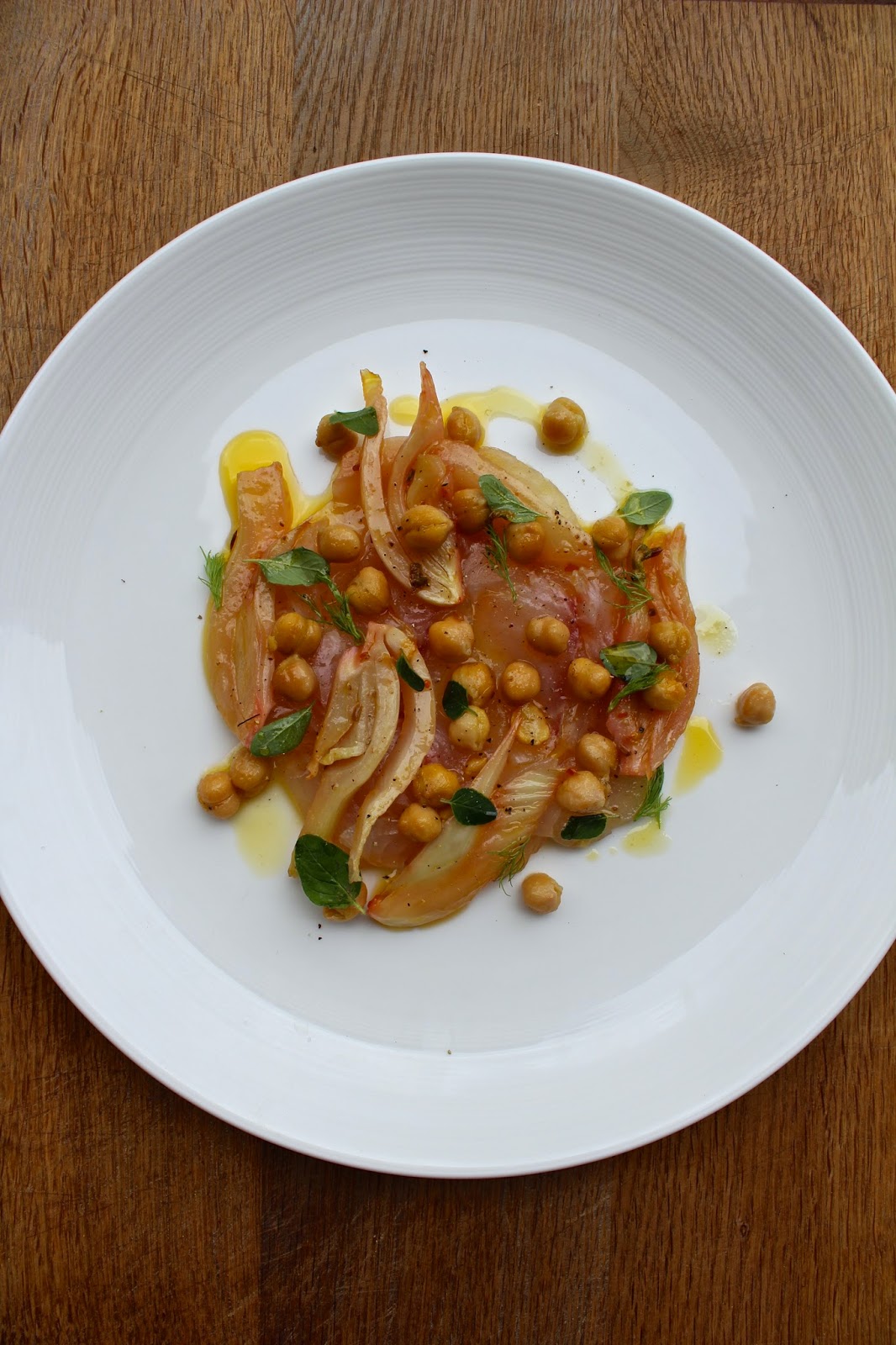
Cured gurnard with chick peas, blood orange, fennel and oregano


I was recently reading through my Twitter timeline, and a few people were writing about how uninspired they were and how they just couldn’t decide what to cook. This was something that I really related to. It’s similar to writer’s block I guess, sometimes my head ties itself in knots trying to find some creativity, whereas other times it’s almost as if the creativity finds me, and recipes effortlessly churn themselves out. Luckily the latter has been the case recently, my head has been awash with cooking ideas and I’ve got a long list of potential recipes to test and write about in the future. Spring is on the way, and it’s exciting that before long we’ll be seeing wild garlic and early asparagus coming through. The way I eat will also change, those bold, heavy winter flavours shifted for something a little lighter. 

 
It was brilliant to cook with the brill that I have written about for the last few posts. It was a big old fish and I was determined to make it go as far as possible. This also allowed me to experiment a little. Having poached a lovely thick bit of fillet and even eaten the roes, I wanted to try something a bit different with what remained. For this I turned to my bookcase for inspiration. I really enjoy Nathan Outlaw’s cook books; his recipes always put flavour first and I’ve picked up so many little tips from cooking his dishes. I had previously noticed that he recommended curing brill, and with a fair bit of fish left I thought I’d give that a go. It worked a treat, and was much quicker than I anticipated. Not only was it an interesting new way of preparing the brill, it also made it last a few days longer; providing a few handsome snacks after some long and tiring days at work.
 
I digress, and after a few weeks of blabbering on I promise that that is the last time I’ll mention that brill for a while. But the idea for this recipe derived from that experimentation. Recently we’ve had some astonishingly good gurnard at work, big, triangular-shaped fish all big heads and spikes. Customers are often a little wary of this species as it looks nothing like the salmon or seabass that they are used to, but for value and taste they are up there with the best. Having cooked with gurnard around Christmastime, I wanted to try something a little different, and because of just how fresh the fish were I thought they would also be ideal to cure. Happily they turned out much like the brill; the thick, firm fillets yealding a fresh, sweet taste.
 
Blood oranges are just coming to the end of their season, and here they provided the perfect sidekick to the gurnard. Combined into almost like a dressing with the fennel and the rapeseed oil, the flavour remained delicate and allowed everything to remain balanced. At this point I felt like the dish needed just one more thing, another texture to round everything off. Here I gained inspiration from another direction. One of the wonderful dishes that I ate recently at Café Murano was a carpaccio, which interestingly came flecked with tiny cannellini beans. This is something that I would never have thought of, but it added another dimension that made the eating all the better. The chickpeas worked in the same way in this dish, and the cooking process was a total revelation. It’s true, anything cooked slowly in good oil with rosemary and garlic is bound to be good, but these were something else. The gentle, lengthy cooking softened the pulses whilst absorbing some of the oil and flavourings. Once allowed to cool and marinate further they really were addictive. I might have eaten another bowl just of them…
 
Serves 4
 
Ingredients:
 
For the fish and cure:
 
1 very fresh gurnard (about 1kg in size), filleted, skinned and pin-boned 
250g salt 
250g sugar 
2 sprigs of rosemary 
The tops of the fennel bulbs 
2 blood oranges, zest only
 
For the fennel and orange:
 
2 fennel bulbs, sliced 
1 tsp fennel seeds 
1/2 tsp dried chilli flakes
1 tbsp caster sugar 
1 garlic clove 
2 blood oranges, juice only 
4 sprigs of fresh oregano 
4 tbsp rapeseed oil
 
For the chickpeas:
 
400g soaked, cooked chickpeas 
2 garlic cloves, crushed slightly 
3 rosemary sprigs 
Extra virgin olive oil
 
To finish:
 
Fresh oregano leaves 
Any fronds from the fennel 

 
For the cure, put the salt, sugar, fennel stalks, orange zest and rosemary into a food processor and combine until everything is finely chopped. Pour half onto the bottom of a deep dish that is big enough to hold the gurnard fillets. Top with the fish and then cover with the remaining mixture. Cover with cling film and refrigerate for 2.5 hours. Once cured, rinse the fillets clean of the cure and pat dry. 


Drain the chickpeas and rinse before pouring into a saucepan. Add the garlic cloves, rosemary and a good amount of seasoning. Pour in enough extra virgin olive oil to nearly cover, then cook on a very low heat for about an hour. Do not let the oil get too hot and start bubbling and frying, you just want a gentle, warm heat. Once cooked, remove from the heat and cool to room temperature.
 
For the fennel, heat a frying pan to a high temperature and add a little of the rapeseed oil. Fry the fennel, fennel seeds, dried chilli and garlic for about 5 minutes, until starting to caramelise on both sides. Add the sugar, orange juice and oregano and reduce until thick and syrupy. Stir in the rest of the rapeseed oil. Taste and season, then allow to cool. 


To plate up, slice the cured gurnard into slithers a couple of millimetres thick. Arrange on the bottom of each plate, then dress with the fennel and oil. Sprinkle over a few drained chickpeas and scatter on more of the fresh oregano leaves and any fennel fronds. Finish with a slight crack of pepper.

Tuesday, 13 November 2012

Salmon three ways with horseradish cream, pickled radishes and crispy skin


Sometimes when I have a day or an evening when I am in the house on my own, I like to go to town on what I eat and make myself a ridiculously over the top dinner or lunch for one. I have no pressure to put a meal on the table and can take as long as I like, which often means eating at around 10pm after my overambitious cooking has ran away with the time. But sometimes it can be quick and easy, and I am left content and that the effort was all worth it, albeit dreading all of the clearing up... This lunch was one of those easier ones, mostly due to a bit of forward planning that made a lovely dish quite quick to assemble.

I’ve wanted to have a go at curing salmon in beetroot ever since watching Nathan Outlaw make it on Saturday Kitchen a few months back, and at the weekend I had the perfect excuse to give in a try. Katie and I had made sushi on the Saturday night, and I had bought a little extra salmon while I was there. I sometimes get a bit overexcited at fishmongers, and often walk away with a few extra bits that I couldn’t refuse. Come the Sunday I decided that curing would be the way to go, and although it might seem like a pain having to prepare it in advance, it’s hardly any work at all when you get down to it. I replaced the tarragon used by Nathan with garlic, bay and thyme, and after patiently waiting for my salmon to cure, the results were spectacular. After 20 or so hours in the curing mixture, the salmon is almost candied with a glowing red outer, turning into firm dark orange flesh when sliced. The taste is slightly salty, subtle salmon with the sweet hint of beetroot. 


This would have been a great little lunch on it’s own, or in a sandwich with horseradish and watercress as I made Katie the next day. But for this recipe I really wanted to make something special that championed salmon, and the pate and tartare were very quick ways of achieving this. 

The key to all of this as usual is sourcing the best and freshest produce that you can. This is especially the case with anything like quick cures and tartares where the fish isn’t fully cooked, and I wouldn’t dream of using something packaged for days in a supermarket for this. On this occasion I went to the excellent Jonathan Norris in Victoria Park village, and managed to buy a lovely piece of salmon for a very reasonable price. Supporting local independent food shops is important in keeping our high streets interesting, and means that we can have a much more varied choice of better quality, seasonal ingredients than what would be found in a supermarket. If these kind of shops are a little far from home or you don’t have the time, check out Hubbub, a shopping service that visits these amazing producers and delivers to your door.

Serves 2.

Ingredients:

2 nice pieces of salmon loin, ideally cut from the lean top of the fillet, around 2” thick

For the beetroot cure:

2 beetroots, peeled and roughly chopped
10 thyme sprigs
2 garlic cloves, skin removed
2 bay leaves
100g salt
50g sugar

For the smoked salmon pate:

100g smoked salmon
2 spring onions, white end only (save the green middle for the tartare)
1 lemon, juice only
2 tbsp double cream
Salt and pepper

For the salmon tartare:

1 tbsp fresh tarragon leaves, very finely chopped
1 tbsp green part of the spring onions
1/2 lemon, juice only
1 tbsp extra virgin olive oil
Salt and pepper

For the horseradish cream:

4 tbsp creme fraiche
2 tbsp finely grated horseradish
1 tsp english mustard
1 tsp white wine vinegar
1 lemon, juice
Salt and pepper

For the pickled radishes:

4 baby radishes, finely sliced
4 tbsp white wine vinegar (or to cover chopped radishes)
1 lemon, juice
Salt and pepper

To finish:

Peashoots or baby watercress
Warm crusty bread and butter
1 tbsp extra virgin olive oil

Cure one of the salmon loins the day before you want to eat. To do this, put the beetroot, thyme, garlic, bay, salt and sugar into a food processor and blitz well until the mixture is very smooth and runny. Tip this into a small but deep tray and add the salmon, carefully making sure that it gets a good amount of the cure all over before covering the tray and putting in the fridge. Turn the salmon over after about 10 hours and put back in the fridge for another 10. After this time, the salmon will have firmed up a little and will have taken on the bright red beetroot colouring. Wash off the cure mixture and dry on kitchen paper. The cured salmon is now ready to use, and will last a good few days in the fridge at this point. 


To quickly pickle the radishes, slice them very thinly and put into a bowl. Cover with a little salt, pepper, the juice of a lemon and enough white wine vinegar to cover. Leave for at least half an hour for them to soften slightly and go almost translucent. 


For the horseradish cream, put the creme fraiche into a bowl and add the horseradish, mustard, white wine vinegar, lemon and a little seasoning. Mix well and taste, adding more horseradish, lemon or seasoning as needed. Set aside. It is fine to use as it is, but the flavours will get better the longer they can develop, ideally overnight. 


Heat the oven to 200ºC. Put a piece of greaseproof paper onto a baking sheet and place the reserved salmon skin on top. Drizzle over a little oil and seasoning, place another piece of paper on top, followed by another baking sheet. This will keep the skin flat as it cooks. Cook for 8-10 minutes, or until the skin is golden and crispy. Allow to cool and then cut into shards with a sharp knife.


To make the smoked salmon pate, put the spring onion, a little seasoning and the lemon juice into a food processor and blitz until very finely chopped. Add the smoked salmon and blitz again until it is a smooth pate texture. Add the double cream mix a final time until the mixture is a little lighter. Taste and season. 

Make the salmon tartare last of all. Cut the second piece of salmon into small even dice and put in a bowl. Add the finely chopped spring onion and tarragon and mix well. Squeeze over the juice of half a lemon and pour over the extra virgin olive oil. Mix again, taste and season if necessary.


To plate up, slice 3 thin slices of the cured salmon and arrange in the middle of the plate. Add a small pile of the tartare on one side and a quenelle of the pate on the other, poking a piece of crispy salmon skin into the centre. Spoon some horseradish cream around the salmon, add a few pickled radishes and a couple of peashoots (or watercress, if using). Serve with some warm bread and butter and a glass of dry white wine.