Blimey, what a few weeks! I’ve been away getting married in Scotland, followed by a short honeymoon on the Islands of the West Coast (more on this next week), so things have been a little slow on the blog of late. But I’ve got a massive backlog of brilliant recipes coming up in the next few posts, and I’m happy to finally have the time to get things back in order.
As we’re still clinging desperately onto the dregs of asparagus season I thought that this recipe would be best to get going with. Yet again the season has passed by in a flash, and yet again I haven’t taken advantage of the wonderful produce nearly as much as planned. I’m already looking forward to next May when I can grill more of those lovely green spears before covering in lemon juice and good olive oil… Only 11 months to go! That said, it’s never much of a disappointment when asparagus season is over, as we’re now thrown into heady gluts of peas, broad beans and courgettes, and even more recipe ideas.
As usual I’ve got sidetracked, but for this recipe I decided to use white asparagus. The meatier texture and slightly subtler taste combined well with the mushrooms, and the strong porcini flavour running through the dish. Instead of the usual grilling and charring, I decided to cook them in a little water and a fair amount of butter. This way they almost poach and steam at the same time, absorbing the butter but losing very little flavour at the same time.
This recipe came by chance whilst I was out shopping for a different recipe. That week I had had a real craving for a rich, meaty ragu, buttery and heavy with parmesan (this is before the heatwave!). I fancied pot-roasting some pigeons until the meat fell off the bones, before stirring it through some tender homemade pappardelle or orecchiette. I went to the shops hell bent on serving it up for dinner, but I couldn’t for the life of me find any pigeons! With such preconceptions on my mind I was stuck, and had no idea what to cook instead. At the fourth or fifth butcher I spotted some lovely plump Norfolk quails, and along with a nice selection of mushrooms I came up with the idea for this dish. Happily it was damn satisfying, but I still vow to rectify my pigeon woes…
Serves 2
Ingredients:
2 quails, portioned into crowns. Wishbones removed and legs and trimmings saved for sauce
3 large knobs of butter
6 sprigs of thyme
For the asparagus:
4 white asparagus spears, trimmed and peeled
1 knob of butter
A squeeze of lemon juice
For the mushroom ketchup:
350g chestnut mushrooms, very finely sliced
3 garlic cloves, grated
2 shallots, finely chopped
5 sprigs of thyme
3 tbsp dried porcini mushrooms
2 tbsp sugar
2 tbsp cider vinegar
For the sauce:
The trimmings from the quail
2 shallots, chopped
2 garlic cloves, crushed
The trimmings from the mushrooms
3 tbsp dried porcini mushrooms
6 sprigs of thyme
A large glass of white wine
500ml good chicken stock
1 knob of butter
For the wild mushrooms:
2 handfuls of wild mushrooms, I used fresh porcini, girolles and morels. Cleaned and trimmed
1 clove of garlic, finely sliced
3 sprigs of thyme
1 knob of butter
A squeeze of lemon juice
For the broad beans:
2 handfuls of broad beans, podded and shelled
½ a lemon, juice only
For the pancetta:
4 rashers of smoked pancetta
Start by making the mushroom ketchup. Put the dried porcini into a small bowl and cover with a bit of boiling water. Allow to soak for 15-20 minutes, then chop finely, reserving the soaking liquid. Set a large frying pan on a medium heat and add a good glug of olive oil. When hot, fry the shallots, garlic and thyme until softened. Add the finely chopped chestnut and porcini mushrooms and continue to cook for another 10-15 minutes, stirring occasionally, until everything is very soft. Stir in the sugar and the vinegar and taste, adding more seasoning, sugar or vinegar to get the balance just right. Tip the contents of the pan into a food processor and blitz well, then pass through a fine sieve into a bowl. Spoon into a squeezy bottle and set aside.

Next make the sauce. Heat a large, high sided frying pan to a medium-high temperature and add a generous drizzle of olive oil. Season the quail trimmings well, then brown on all sides in the hot pan. Add the shallots, garlic, thyme and any mushroom trimmings to the pan and lightly caramelise, then pour in the wine. Reduce the liquid by half, then top up with the stock. Throw in the dried porcini mushrooms at this point. Bring to a boil and reduce to a thickened sauce, about 20-30 minutes. Strain through a sieve into a small saucepan and stir in the butter until emulsified. Set aside.
Bring a small saucepan of water to the boil and quickly blanche the broad beans for a minute. Shock straight away in ice cold water, then carefully squeeze the tender beans out of their shells. Squeeze over the lemon juice, sprinkle on some salt and pepper and set aside.
Heat up the grill to medium-high. Arrange the smoked pancetta on a lined oven tray, then grill for a few minutes on each side until the rashers are crisp. Drain well on kitchen paper, then break into pieces.
Heat the oven to 190⁰C.
To cook the quail crowns, set a heavy frying pan on a high heat. Add a glug of olive oil, then sear the birds for 1-2 minutes on each breast. Turn the quail so they are sitting upright, then add a knob of butter to the pan and baste all over until golden brown. Transfer to an oven dish, then roast in the oven for 8 minutes, rubbing with more butter half way through. Let the cooked birds rest for 10 minutes before carving the breasts.
While the quails are resting cook the asparagus. Melt the butter in a large saucepan and add seasoning and a good splash of water. Add the asparagus and cook for 4-5 minutes, turning frequently. Finish with a squeeze of lemon juice and add the shelled broad beans to warm through.
Heat a large frying pan for the mushrooms and melt the butter. Add the thick porcini mushrooms first along with the garlic and thyme and cook for a couple of minutes. Tip in the girolle and morel mushrooms and toss everything together, then continue to fry until everything is just cooked and tender. Finish with a squeeze of lemon juice.
Reheat the sauce.
To plate up, arrange two pieces of asparagus on each plate and position the quail breasts to each side. Squeeze on a good dollop of the mushroom ketchup. Scatter over the mushrooms, broad beans and crispy pancetta. Finish with a good few spoonfuls of sauce.
Now that we’re into June the produce is really coming along. The first broad beans are threatening, and I know it won’t be long until my favourite peas start to make an appearance. Expect many a pea love in anytime soon. We’re still clinging on to asparagus, and lovely Jersey Royal potatoes and samphire are back on the menu. Sadly though this time of year spells the end of the wild garlic season, but I think I’ve rinsed it quite enough; using it wherever possible to flavour stuffings, oils and salads. I’ve just about managed to sneak it into this recipe, but from now on I’ll have to slowly build up my anticipation for next spring.
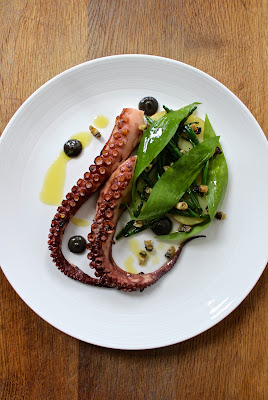
One ingredient that I haven’t rinsed is octopus. I probably on average cook one octopus a year, but that definitely needs to change. A more moreish, delicious thing I struggle to imagine. At work we sell a fair few of these lovable beasts every week, but mostly to Spanish or Italian customers who don’t blink at leaving the shop lugging a 3kg cephalopod behind them. The majority of others squirm, or pull a funny face at a glance! I guess they are slightly intimidating if you’ve never had a go at cooking one before, but you quickly learn how easy and satisfying the results are. Nevertheless, and slightly devastatingly, Katie really isn’t a fan, so I always have to try and steal an evening or afternoon when she is elsewhere before I can quench my octopus cravings. A sunny day last week provided the ideal opportunity…
Freezing food rarely improves it, but with octopus (octopi? octopuses? octopus?...) the process performs miracles. Traditionally to tenderise the firm, elastic flesh you would have to bash the living daylights out of it with a mallet, or flail it against the nearest rock. But after a quick stay in the freezer, all of this is done for you. All that is then required is a gentle simmer for just under an hour and it’ll be wonderfully soft. At this point it is ready to eat, and can be tossed through a salad, drenched in marinades or merely sliced and nibbled on at will, but I think that a quick exposure to a fierce heat really gets the best out of it. The deep, savoury, smoky flavour and crispy/soft combination is so addictive. I polished off the lot.
This is less of a hot dish, more along the lines of a warm salad; and as I discovered with the leftovers, is equally delicious cold. The longer that the lemon marinade gets to slosh around and permeate into the potatoes, samphire and octopus the better. And it’s a fact that a bit of mayonnaise will always make things better.
Serves 4
Ingredients:
For the octopus:
1 Mediterranean octopus, the double sucker variety, about 1 kg, cleaned
2 shallots, sliced
1 fennel bulb, sliced
2 garlic cloves
1 bay leaf
½ a lemon
1 large glass of white wine
For the squid ink mayonnaise:
2 sachets of squid or cuttlefish ink
2 egg yolks
1 clove of garlic, grated
1 tsp Dijon mustard
250ml olive oil
1 lemon, zest and juice
1 tbsp white wine vinegar
For the jersey royal potatoes:
4-6 medium-sized jersey royal potatoes, washed
2 lemons, juice only
1 large clove of smoked garlic, thinly sliced
3-4 tbsp extra virgin olive oil
For the winkles and samphire:
2 handfuls of live winkles, purged in salted water for at least 20 minutes
2 handfuls of samphire
1 lemon, juice only
To finish:
12 wild garlic leaves, washed
Start by braising the octopus. Put the octopus in a large saucepan along with the shallots, fennel, garlic, bay and lemon. Pour in the wine and top up with an equal amount of water. Bring to the boil, then cover and simmer very gently for 45 minutes, or until the octopus is very tender. Remove from the pan to a side plate and allow to cool, then remove the head and chop the tentacles into individual pieces.
While the octopus is cooking, boil the potatoes. Put the washed jersey royals into a saucepan and cover with cold, salted water. Bring to the boil and simmer for 15-20 minutes, or until cooked through. Drain well, then cut into thin slices and arrange in a bowl. Make the dressing by squeezing the lemon juice into a small bowl and adding the smoked garlic. Slowly but thoroughly whisk in the olive oil until emulsified, then season well with salt and pepper. Pour two-thirds of the dressing over the potatoes while they are still warm, then set aside.

Put the egg yolks for the mayonnaise into a small food processor along with the vinegar, mustard, salt, pepper, garlic and lemon zest, then blitz together well. With the motor still running, drizzle in the olive oil very slowly, until it is all poured in and the mixture has emulsified into a thick mayonnaise. Squeeze in the squid ink and the lemon juice and combine well again so that the dark colour permeates the whole mixture. Taste and adjust the seasoning, and loosen the texture with a splash of water if needed. Spoon into a plastic squeezy bottle and set aside.
Bring a small saucepan of well-salted water to the boil. When hot, add the winkles and boil for 3-4 minutes. Drain well, then use a fork to pick the meat out of the shells. Remove the dark stomach sacks and hard feet from each winkle. Heat a generous amount of olive oil up in a large frying pan until it reaches a low-medium temperature. Add a good splash of water, then add the winkle meat and the samphire. Warm through for a couple of minutes.
Heat a griddle pan up until smoking hot. Coat the octopus tentacles with olive oil, then cook for 2-3 minutes in total, turning once or twice, until lightly charred.
To plate up, arrange two of the octopus tentacles onto each plate, along with a few slices of the marinated potatoes. Dot on a good amount of the squid ink mayonnaise, and spoon some of the samphire and winkles on top of the potatoes. Finish with some of the wild garlic leaves and a drizzle of the reserved lemon and garlic dressing.
A bit of dried oregano, a pinch of chilli flakes, a heap of garlic, a scrape of lemon zest and a sprig or two of rosemary. I find myself almost automatically adding these to pretty much everything at the moment. The base of a soup, over potatoes, stirred into some soft, oily pasta; it does the job every time. I guess it just shows the importance of the store cupboard. As much as I preach on about fresh, seasonal ingredients, I am still able to whip up something mega tasty by opening a trusty jar or two. And here they form the core of the recipe.

When you buy kid goat, it is compulsory to make the obvious dad joke. As an avid dad-joke aficionado, I’ve also stored it up for many a future use. The texts to the long-suffering other half about coming home with a kid in the bag didn’t get a response. When I walked through the door and exclaimed that the very next day I was going to slowly roast a kid all I got was an “uh huh”. She didn’t even look up. It’s fair enough I suppose. Such terrible humour doesn’t require acknowledgement.
But aside from such cringeworthy antics, I was genuinely really excited to be cooking a goat dish. I’ve always enjoyed eating goat, but I’ve been surprised at why such a presumably prime and abundant source of protein isn’t used more. Demand I guess? It’s only relatively recently that I’ve started seeing it on the odd menu, so good on those restaurants for doing something a little different.
This is one of those recipes that’s dead simple in principle and technique, it just requires a little bit of time and patience. But the results were totally worth it. The meat, cooked for so long, was falling off the bone and moreishly tender. The new season samphire added a lovely, salty kick, whilst the soft chickpeas rounded the dish off with an element of comfort. I shall definitely be returning to goat in the future, especially once it gets properly warm and the barbeque gets dragged out…
Serves 4
Ingredients:
For the kid:
1 shoulder of kid, about 1.8-2kg in weight, on the bone
4 sprigs of rosemary
3 onions, sliced
3 cloves of garlic, crushed
1 tsp dried chilli flakes
1 tsp dried oregano
2 bay leaves
½ a bottle white wine
1.5 ltrs good chicken stock
Straw for smoking
For the sauce:
The braising stock from the kid
2 good knobs of butter
For the chickpeas:
2 tins of chickpeas, drained
1 shallot, finely sliced
4 sprigs of rosemary, leaves picked and finely chopped
3 garlic cloves, grated
1 tsp dried chilli flakes
2 tsp dried oregano
1 lemon, zest and juice
4 tbsp of good olive oil
For the greens:
A handful of purple sprouting broccoli, trimmed and leaves kept
A good handful of samphire
A squeeze of lemon juice
To finish:
A few rosemary flowers
Get the kid on to start with. Preheat the oven to 120⁰C. Heat a large, heavy casserole dish (one with a lid and big enough to fit the joint into) to a high temperature. Season the shoulder all over with salt and pepper, add a generous amount of oil to the dish and brown well on all sides. Transfer the browned joint to a plate and set aside. Tip in the sliced onions, garlic, rosemary, chilli, oregano and bay and fry for a few minutes, stirring frequently, until lightly caramelised and softened. With the heat still high, pour in the white wine and bring to the boil, then allow to reduce by half. Use a wooden spoon to scrape up any crusty bits from the bottom of the pan. Top up with the stock and bring to a simmer. Pop the kid shoulder back in the dish, add the lid on top and slide into the oven for 4 hours, or until the meat is very soft.

When the meat has had its first cook, use some tongs to carefully transfer it in one piece to your smoking device (I use a bbq with a lid). Fill the bottom with straw and set alight, then close the lid and allow to smoke for about 20 minutes. Finally transfer the kid to a dish and allow to rest for at least 45 minutes.
To make the sauce, strain the kid cooking stock through a sieve into a saucepan. Bring to the boil, then reduce right down until thickened enough to coat the back of a spoon. Remove from the heat, and stir the butter in really well, until fully dissolved. Set aside and keep warm.
For the chickpeas, add a little oil to a medium saucepan, and gently soften the shallot and garlic with the rosemary, chilli, oregano and lemon zest. Add the chickpeas and top up with the rest of the olive oil. Turn the heat right down and cook for another 30 minutes, stirring occasionally, until the chickpeas are very soft. Season really well with salt and pepper. Transfer 4 tablespoons of the chickpeas to a separate bowl and set aside until later, and transfer the rest into a food processor. Add the lemon juice and blend really well, until smooth. Taste and adjust the seasoning and acidity if needed. If the mixture is too firm, let it down with a few drops of water. Pour the puree back into a saucepan and set aside for reheating when needed.

To cook the greens, set a large frying pan onto a medium heat and add a good glug of oil. Add the purple broccoli first, and lightly colour on all sides. Pour in a good splash of water and continue to cook until al-dente. Add the samphire and broccoli leaves with about a minute to go. Finish with the lemon juice and a little seasoning.
Carve the kid shoulder into large chunks. Reheat the chickpeas and sauce if needed.
To serve, spoon large dollops of the chickpea puree onto each plate. Arrange a few chunks of the goat to the side and surround with the greens. Scatter over some of the whole chickpeas and some rosemary flowers if you have any. Finish with a generous amount of the sauce.
A tomato is a tomato is a tomato right? Those matt red orbs bagged up on supermarket aisles are the fresh ones, the reduced and intensified ones in the tubes form the puree and the others are chucked in a blender and then tinned. If you’re being well fancy and putting together a 1990s antipasti, then a jar of those oily sundried things look great with a nifty rocket salad and some balsamic vinegar. This is pretty much what I thought during my teens and early twenties. The time that I was positive beyond anything else that I HATED tomatoes.

I’m not sure at what point the revelation happened. There was no epiphany as such. But somewhere along the line I worked out that the main problem wasn’t tomatoes as a whole, but just the tomatoes I was used to eating (hiding under a napkin). I think it must have coincided with learning about the impact that salt has on everything. Suddenly the most basic of ingredients were transformed, and somehow started to taste like they were supposed to. And instead of thinking that those squishy, soft tomatoes were past it, I worked out that they were just the ones to seek. Chopped roughly with a liberal amount of wonder-seasoning and some oil, I was scratching my head at why I’d been so avidly avoiding tomatoes all of this time.
I first ate panzanella totally by accident. Katie and I had been seeing each other for a short matter of months, and had enthusiastically hopped by plain and train to the depths of Tuscany, still unsure if we’d come back talking. It had been a magical whirlwind trip filled with the long, rolling views of Siena and pizza gorging in bustling piazzas. But we hated Florence, all blood and sweat from Caravaggio, mosquitoes and wall-to-wall tourists. We escaped one evening to a quiet eatery across the river where our waitress delivered a stodgy tomato salad. It was delicious, but we just couldn’t work out what all of the soggy stuff was. Then it dawned on us, bread. It certainly beat the bouncy veal and nondescript mushroom gnocchi that we had consumed to that point.
The concept for this recipe was not a difficult one. At work we had a batch of magnificent, solid bass and a box of ripe, jewel-like heritage tomatoes. Crab is best friends with both of these, especially the brown meat, which brought everything together with a deep richness. A few torn up bits of bread, some good oil and basil leaves and the dish was there.
Serves 2
Ingredients:
For the seabass:
2 wild seabass fillets, from 1kg plus fish. Scaled, trimmed and pinboned.
A squeeze of lemon juice
For the brown crabmeat:
4 tbsp good quality, fresh brown crabmeat
50g ciabatta, crusts removed
1 lemon, juice only
2-3 tbsp extra virgin olive oil
Cracked black pepper
For the bread:
2-4 thin slices of ciabatta, depending on size of the loaf
1 ripe tomato, crushed
½ a garlic clove, grated
For the dressing:
3 red chillies, finely sliced
2 garlic cloves, grated
1 shallot, finely sliced
1 tsp fennel seeds
1 tsp dried oregano
1 lemon, zest only
1 small handful of basil leaves, torn
6 tbsp extra virgin olive oil
2 tbsp white wine vinegar
For the semi-dried tomatoes:
3 medium tomatoes, cut into quarters
Salt
For the asparagus:
6 asparagus spears, peeled and trimmed
A squeeze of lemon juice
For the tomatoes:
3-6 ripe heritage tomatoes, a mixture of sizes and colours, sliced and chopped into different sized pieces
To finish:
4 tbsp good quality, unpasteurised white crabmeat
A handful of basil leaves
First make the chilli oil for the dressing. Set a small saucepan to a high temperature and pour in a little olive oil. Fry the red chillies until starting to char on the outside, then turn down the temperature and add the grated garlic, shallot, dried fennel seeds, oregano and lemon zest along with a pinch of seasoning. Continue to cook gently for another few minutes until everything is softened. Remove the pan from the heat and allow to cool slightly, then pour in the rest of the oil and the torn basil leaves. Stir to combine. When completely cold, cover and allow to infuse overnight.
Strain the chilli oil through a fine sieve and discard the flavourings. Create the dressing by pouring the white wine vinegar into a bowl and slowly whisking in 5-6 tbsp of the flavoured oil until emulsified. Taste and season if necessary then set aside.
For the semi-dried tomatoes, preheat the oven to the lowest possible temperature – about 50⁰C or thereabouts. Line a small baking tray with greaseproof paper and drizzle with a little oil. Arrange the quarters of tomato on top and sprinkle with a little salt. Slide into the oven and roast for 3-4 hours, until intense in flavour but still fairly soft. Turn off the oven and allow everything to cool down. When cold, coat with a little extra virgin olive oil and set aside.
To prepare the brown crab meat, spoon the crab into a food processor and add the ciabatta and lemon juice along with a little seasoning and blitz well. With the motor still running, slowly pour in the olive oil until everything is emulsified. Taste and adjust the lemon, salt and pepper levels if necessary, and let down with a little water if too thick. Spoon into a bowl and set aside.
Slice the heritage tomatoes into a random mixture of different-sized pieces and arrange in a bowl. Spoon over a little of the dressing and allow to sit for 5-10 minutes.
Set a heavy griddle pan onto a high heat. Drizzle a little olive oil onto the ciabatta slices and sprinkle over some seasoning. When the pan is hot, fry the bread for a few minutes on each side until they begin to char. Use a pestle and mortar to finely crush the tomato and garlic together then spread onto a plate. When the bread is toasted, transfer on top of the crushed tomatoes and allow to soak up the juices for a few minutes.
Brush the asparagus with oil and season. Cook on the same griddle pan as used for the bread, frying at a high heat for a few minutes until beginning to blister on all sides. Transfer to a plate and squeeze over a little lemon juice. Keep warm.
Set a heavy frying pan to a medium-high heat and add a generous splash of oil. Pat the sea bass fillets dry with a piece of kitchen roll and season all over. When the pan is hot, place the fish skin-side down in the pan and cook for 3 minutes. During this time, use a spoon to continuously baste the top of each fillet, effectively cooking it through both sides at the same time. Finish with a little lemon juice.
To serve, arrange the slices of ciabatta and some pieces of fresh and semi-dried tomato on each plate. Dot on a generous amount of the brown crab puree. Position the fish on top of one of the pieces of ciabatta. Scatter the asparagus spears, white crab meat and basil leaves around the plate and finish with a good amount of the dressing.
Anchovies are one of those ingredients that split people. Katie hates the little oily, salty strips and will pick up their scent however well concealed in a sauce, under a heap of cheese on a pizza or poked into chunks of lamb. I know that screwed up face and “oh! There’s anchovies in here!” very well indeed. But I adore the things. I always remember my mum eating them straight out of those shallow tins when I was young, and I’ve enjoyed that tangy kick ever since. I’ll find any excuse to put them into a dish. And although punchy in their own right, used subtly they deepen, round off and enhance. But she will always notice.
On the other hand I deplore marmite. I used to bite into my brothers sandwiches by accident and pull that exact same creased expression. I’m often urged to spoon it into mash, sauté with mushrooms just try again on toast but I can’t. So swings and roundabouts I guess.
Back to those glorious anchovies. I’ve always had a vastly more savoury tooth, and often crave the deep hit of something salty. Crisps over chocolate any day of the week. Our rosemary plant has been flowering of late, releasing lovely fragrant pine just outside the back door. Recently at work I had an idea of crushing up a few sprigs with more of those anchovies (there is *always* a jar in the fridge) and some green olives. Tapenadey I guess, but a whole lot more rustic, with chunks of individual components giving little bursts of flavour. Even at work I could taste it; I almost ran the four miles back home.
But I couldn’t just sit there spooning this delicious concoction into my gob (I totally could and would). I needed some sort of carrier. A good sourdough or focaccia from my local and brilliant Spence or E5 bakeries would normally be the quick answer. But I’ve been criminally quiet on the baking front of late, and thought the whole thing would be that bit more satisfying as a result. I’d stumbled across a recipe for Italian ‘music bread’ a few weeks before and was astounded at how easy they were to knock up. In the fading evening light I dug out the trusty pasta machine, whacked the oven on full blast and the brittle, almost transparent bits of dough worked a treat.
Makes a fair few sheets, but they don't hang around for long.
Ingredients:
For the carta di musica:
200g Italian 00-grade flour, plus more for dusting
4 good tablespoons of polenta
150ml water
1 tbsp olive oil
Sea salt
For the olive and rosemary salsa:
A handful of green olives, pitted
4 anchovy fillets
1 garlic clove
4 sprigs of rosemary, leaves picked and finely chopped
1 tbsp capers, rinsed
1 lemon, zest and juice
A pinch of dried oregano
A pinch of dried chilli flakes
Extra virgin olive oil
Preheat the oven to 220⁰C.
Tip the flour into a bowl and mix with the polenta and a generous sprinkle of salt. Form a well in the middle and pour in the water and the olive oil. Work into a dough, adding a little more water or flour if necessary to achieve a smooth consistency. Knead well to release the glutens until the dough has a soft, elastic texture. Roll until thin, dust with a little more flour and then pass through each gradient of a pasta machine until it reaches the thinnest.
Line a couple of baking trays with greaseproof paper and brush with a little olive oil. Top with the thin strips of dough. Brush with more oil, sprinkle with a bit of salt and bake in batches for 5-6 minutes, or until very crispy and starting to brown in patches.
To make the salsa, put the garlic, olives, lemon zest and juice, anchovies, capers, oregano, chilli flakes, and chopped rosemary into a large pestle and mortar. Beat well until everything is finely combined. Pour in enough extra virgin olive oil to loosen into a spoonable salsa. Taste and add salt, pepper or lemon if needed.


