As with every October and November, gourds slowly begin to invade every meal. At the weekend there was roast chicken with crispy potatoes and a few slices of orange butternut sitting gingerly on the side. Then there was the post-bonfire night pumpkin soup, the roasted squash, steak and feta salad and there are still bulbous orange orbs sat atop most of the kitchen surfaces. If I’m really lucky, Katie will hopefully make her extra special pumpkin pies around Thanksgiving time. Don’t get me wrong, I really like it all, but sometimes you can definitely have too much of a good thing. So it was really good to recently stumble across a new (to me) preparation technique, something much more vibrant and fresher than the standard roasting, mashing or gratinating. The Duck Soup cookbook is definitely one of my favourite sources of cooking inspiration of late, and I was intrigued to see them treating butternut squash much like a summer courgette; peeling it thinly and tossing it raw into a salad. I’ve always been nervous about the taste of uncooked ‘green’ gourds, but after marinating briefly with a few trusty flavourings, I was dead happy with the results. The thin ribbons still retain a slight bite, but are reduced to a beautiful delicateness which marries perfectly with the other components on the dish.

The concept of this recipe began way before the detail, to the point where I still didn’t know what fish to use on the day that I was due to start cooking. Luckily, with a large slab of glistening fish at my disposal, I had plenty of options to pick from. The old curing or raw favourites were all there; bright pink tuna, beautifully fatty salmon and wild seabass like cricket bats. But keeping with the autumnal spirit, it seemed more appropriate to take advantage of the tide of wonderful red mullet that have come into season lately. Although not traditionally served in an uncooked state, they carry a lovely sweet flavour and slightly oily texture which I thought would work well. They only require a swift dip into the salty cure, just enough to add a touch of firmness, before they are all set for the plate.
When serving cured fish, subtlety is king, and care must be taken not to interrupt the flavour of the main event. Although I have used garlic and dried chilli, only a slight touch is needed. The soured crème fraiche and picked mint leaves tie everything together, adding a final refreshing hit.
Serves 2
Ingredients:
For the red mullet:
2 red mullet, about 300g each, scaled, filleted and pin boned
200g sugar
250g salt
For the marinated pumpkin:
2 1” wedges of pumpkin or squash, such as butternut, Italian stripe or delicate
1 lemon, zest finely grated and half of the juice
1/3 clove of garlic, finely grated
A small pinch of dried chilli flakes
3 tbsp extra virgin olive oil
For the crème fraiche:
3 tbsp crème fraiche
A squeeze of lemon juice
To finish:
A few fresh mint leaves
Pour the salt and sugar into a bowl and mix together. Spread a quarter of the mixture evenly onto the bottom of a dish that is large enough to hold the mullet fillets in one layer. Place the fillets on top of the salt and sugar, then fully cover with the rest of the mixture. Use cling film to seal the dish, then refrigerate and allow to cure for about an hour. Once the fillets are cured, remove them from the dish and rinse clean, then pat dry with kitchen paper. Set aside.
Use a vegetable peeler to strip the pumpkin flesh into thin, long ribbons and place in a bowl. Squeeze over the lemon juice along with the zest, chilli flakes, garlic, extra virgin olive oil and a good pinch of seasoning. Combine well until each strand is well coated, then set aside to marinate for about an hour.
Spoon the crème fraiche into a bowl and season well. Squeeze in a small amount of lemon juice, about a teaspoon, then mix together with a spoon. Transfer into a plastic bottle.
Carefully skin the red mullet with a sharp filleting knife. Slice each fillet into three or four pieces.
To plate up, arrange the cured chunks of fish onto each plate, and generously squeeze on a few blobs of lemony crème fraiche. Top with strands of the marinated pumpkin and some fresh mint leaves. Spoon a little of the marinade over the top and serve.
When at the fishmongers, it is always best to try and buy something as big as possible. Not only does this dodge the ethical issue of eating unsustainable, baby fish, but often it will result in a better finished dish. This is particularly the case with whole fish such as sole, turbot, bass, bream and salmon. A larger fish will yield a thicker fillet, which will cook more evenly and be much more succulent and satisfying to eat than little bits and pieces scraped from the bones.

Of course, buying large fish is often expensive and impractical if you’re not feeding many. But there are a few ways around this problem. Many types of fish when handled correctly will freeze in individual fillet portions really well, creating a few easy dinners in the month to come. Alternatively, you can try curing or preserving the remaining fish. I’ve been particularly enjoying this in the last few months, and see it as an opportunity to create something completely different out of what would be leftovers. It takes minutes of effort and once cured will keep in the fridge for a good few days. Most fresh fish can be prepared in this way; this year alone I’ve had great results with gurnard, brill, salmon and mackerel.
To turn my cured fish into a finished dish, I always consider the final balance of flavour. Oiliness, saltiness, sweetness, sharpness and texture all needs to be judged properly to get the best out of the fish. For this recipe, I’ve used some of the wonderful sweet summer peas and baby courgettes that are right in season at the moment. It really is worth making the effort to shell each little pea properly, as this will remove any bitterness. To counter the sweetness, I’ve made a punchy lemon puree. This stuff is strong, and you certainly don’t need much of it on the finished plate.
As with the last recipe, the seatrout season has now finished (boo!). But good quality salmon will work perfectly in its place, as would a firm white fish such as monkfish, john dory or brill. Just increase or shorten the curing time depending on the thickness and density of the fillet.
Serves 2
Ingredients:
For the cured seatrout:
1 thick top end of a seatrout fillet, about 400g, pin-boned
150g sugar
150g salt
A few sprigs of mint
A few sprigs of tarragon
1 lemon, zest only
For the lemon puree:
2 Sicilian lemons, peeled
130g caster sugar
½ a lemon, juice only
5 tbsp extra virgin olive oil
For the vegetables:
2 large handfuls of fresh British peas
3 baby courgettes
To finish:
Extra virgin olive oil
A few sprigs of mint
A handful of peashoots
First get the seatrout on to cure. Put the sugar and salt in a food processor with the tarragon, mint and lemon zest and blend well until everything is finely chopped. Tip half of it into a dish large enough to snugly fit the seatrout in. Pop the fish on top, then cover with the remaining half of the cure mixture, making sure all sides are covered. Seal the top with clingfilm and refrigerate for 4-6 hours, until the seatrout has firmed up. Rinse the fish well and pat dry with kitchen roll. Remove the skin, then carefully slice into thin ‘D’ cuts.

While the fish is curing, make the lemon puree. Put the lemons into a saucepan and cover with water. Sprinkle in about 10g of sugar and bring to the boil. Drain the water away, then repeat this process another 7 times, until the lemons are very soft. Transfer the lemons to a food processor and blend into a puree with the lemon juice, some salt and pepper and a teaspoon of the caster sugar. With the motor still running, drizzle in the olive oil until emulsified. Have a taste and adjust if needed, you want it to be quite sharp. Pass through a fine sieve and pour into a plastic bottle. Set aside for plating.
Fill up a saucepan and bring to the boil. While you’re waiting for the water to heat up, pod the peas. Add a little salt to the water and blanche the peas for two minutes, then refresh in a big bowl of cold water. Drain well, then squeeze the shells away from the sweet inner-peas. Dress the peas with a good glug of olive oil and a pinch of seasoning. Trim the baby courgettes and slice into thin rounds, then add to the peas.
To plate up, arrange some slices of the seatrout onto each plate. Dot a little of the lemon puree around the plate, and scatter over the peas and courgette. Finish with some peashoots, mint leaves and a final drizzle of extra virgin olive oil.
Another week, another curing project. In a totally spontaneous manner I have managed to fill my summer with a number of lengthy and not entirely necessary preservation projects. But although I’ve had to put up with many estranged “are you crazy” type looks from the friends, family and total strangers whose ears I’ve bent detailing my doings, I have to say that they have all absolutely been worth it. It is true, you can buy good, exceptional even, sardines, and in this case bacon, from some fabulous independent suppliers. They will definitely save you time and might even in some cases be cheaper, but there is definitely something for the satisfaction felt in sitting down and eating something that has been days or weeks in the making. I have also discovered that a big lump of bacon as a gift inspires a great deal of happiness.

In this case, I was inspired by reading old Hugh Fearnley-Whittingstall books where he explores old-fashioned techniques such as curing, smoking and preserving, and it occurred to me just how simple a lot of it is. I used to think that DIY bacon was something that was unreachable to small-flat city dwellers, but I was instantly taken with the idea, and I quick trip to my local Ginger Pig saw me committed with a large hunk of pork belly. Miraculously the whole process was surprisingly simple, and even without a proper smoker I managed to achieve a similar result using a BBQ which had a lid to catch the smoke. I have to say, the bacon that came from this labour of love tasted pretty damn good, and happily I have still got a big old piece in the fridge to whittle away every so often.
Bacon is normally the bridesmaid. There to discretely add a depth of flavour or add a salty contrast to the primary ingredient. After getting this far, I really wanted it to be the star of the show in this dish. I’ve cut thick, proper slices and fried them until crispy, and only paired them with subtle vegetables and herbs to create something fresh and light yet packed with flavour. This year I’ve been growing courgettes, cucumbers and mint on my balcony, and it’s been lovely to walk out on a summer evening and pick a few things to go with dinner.
As I said, you can buy fantastic bacon if the process puts you off. If that’s the case, this dinner becomes a very quick affair indeed. But I’ve caught the bug now, and am on the hunt for more ingredients to chuck in the smoker…
Serves 2, plus a good bit of extra bacon
Ingredients:
For the bacon:
2.5kg pork belly, ribs removed for eating on another occasion
1kg table salt
200g brown sugar
1 lemon, zest only
10 sprigs of thyme
4 tbsp black treacle
Juniper chips for smoking for 24 hours
For the roasted carrots:
6 small heritage carrots, trimmed, washed and scrubbed if necessary
3 sprigs thyme, leaves picked
1 garlic clove, crushed into a few pieces
¼ lemon, juice only
For the courgettes and cucumber:
2 baby courgettes, flowers reserved
2 baby cucumbers, flowers reserved
1 lemon, juice and zest
3 sprigs mint, leaves picked and roughly torn
Splash of cider vinegar
For the mint and parmesan sauce:
½ bunch of mint, leaves picked
5 sprigs fresh oregano, leaves picked
1 clove of garlic, grated
1 lemon, zest and juice
3 tbsp grated parmesan
3 tbsp extra virgin olive oil
To finish:
The flowers from the baby courgettes, stamens removed and leaves roughly torn
The flowers from the baby cucumbers
Red-veined sorrel leaves
Fennel herb sprigs
Start by curing the bacon. Mix the salt, sugar, treacle, thyme and lemon zest together in a bowl. Pour a quarter of the mixture into the bottom of a large, deep dish, big enough to accommodate the pork belly. Place the pork belly on top, then evenly distribute more of the curing mixture over the top and sides, rubbing the meat in the process. Keep about a quarter of the cure. Cover the dish with cling film and refrigerate for 5 days. After a couple of days moisture will have drained out of the meat. Drain this away and pack the remaining cure around the pork. After 5 days, rinse the meat clean and pat dry. It should have firmed in texture and darkened. Clean the dish and place the meat back in it, then refrigerate, uncovered, in the fridge for another 24 hours to dry out.

Create a long, heaped line of the fine juniper chips on the bottom of the smoker or barbeque and light one end until caught and smoking constantly. Place the pork on a rack above, then cover with a lid. Slightly open any ventilation ducts and leave to cold smoke for 24 hours. Check every 3-4 hours, topping up and relighting the chips as and when needed. When smoked the bacon will have taken on a golden colour and have a lovely smokey aroma. Wrap with cling film and refrigerate until needed.
To prepare the courgettes, use a mandolin to slice into thin cross-sections. Cut the baby cucumbers into long quarters. Put both into a bowl and add the lemon zest and juice, vinegar and mint leaves along with a good pinch of seasoning. Mix to combine then cover and set aside.
For the mint and parmesan sauce, put all ingredients into a food processor and blend until everything is finely chopped and combined, adding a little more oil if needed to loosen. Taste and adjust the seasoning and/or acidity if needed.
Pre-heat the oven to 180⁰C.
Put the carrots on a baking tray and scatter over the thyme leaves, garlic clove and seasoning, then drizzle with olive oil. Roast in the oven for about 20 minutes, or until tender. When cooked, squeeze over the lemon juice.
Pour a little olive oil into a frying pan and set on a medium-high heat. Cut two thick 2cm slices from the bacon joint and fry for about 5 minutes on each side, until well browned and crisp on the outside and cooked through. When ready, remove the bacon from the pan and use a little of the juices to dress the courgettes and cucumber.
To serve, transfer one piece of bacon onto each plate. Place some of the courgette and cucumber slices and roasted carrots around it. Scatter over some of the vegetable flowers, fennel sprigs and sorrel leaves and finish by dotting some of the mint sauce around the plate.
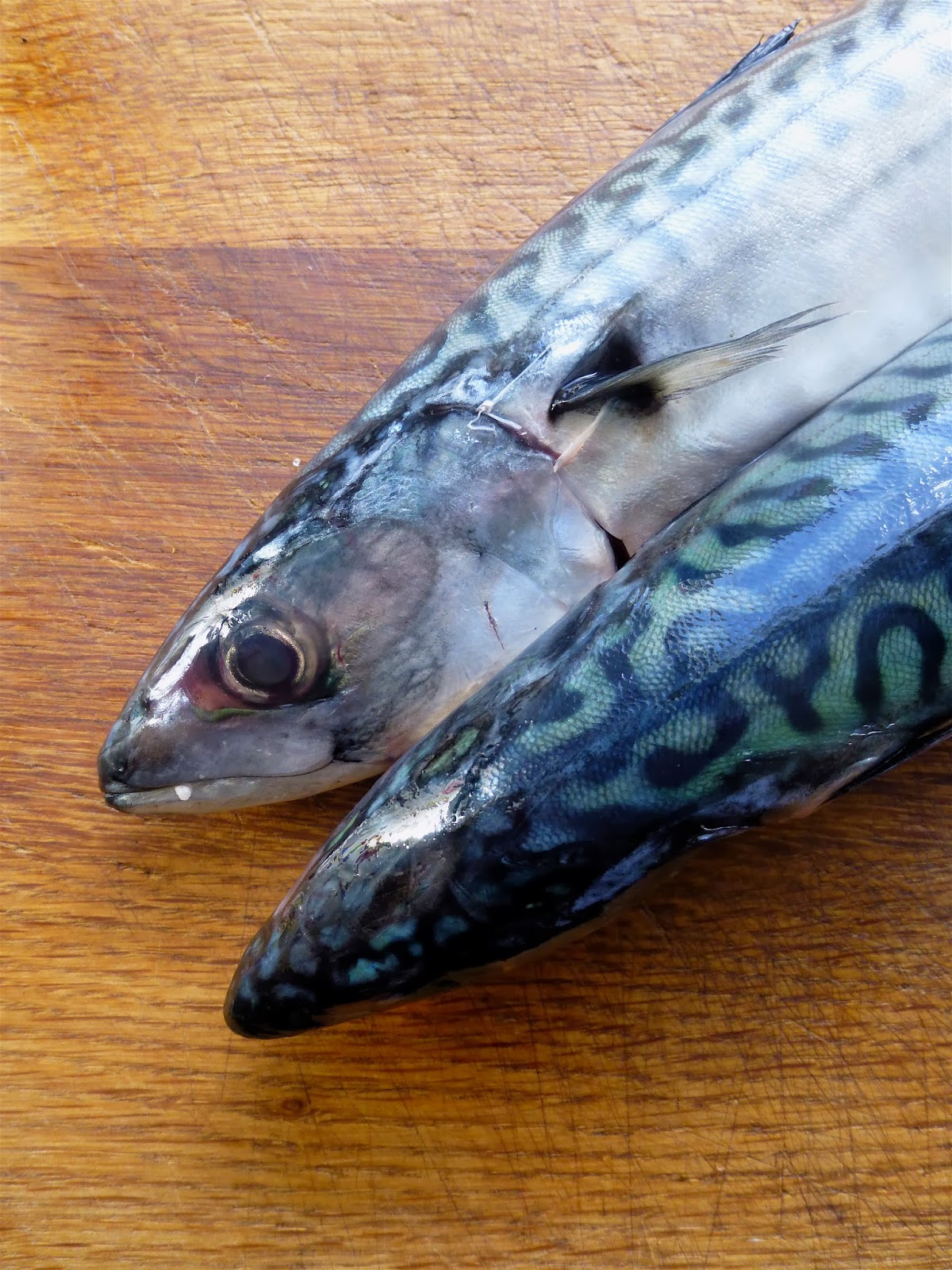
I cook with mackerel quite a lot, and regular readers will know that I have covered it in various guises in this blog before. However it has been a fair while since its last appearance, so it’s about time that this amazing fish is top of the page again. Every week that I write, in fact every time I cook, I learn something new, and I am constantly looking back on how to improve things that I have made before. My mind is always whirring away trying to work out flavour combinations or complete a long list of initial ideas that just require one or two things to tie them together. So I guess that this is an update on a mackerel and beetroot recipe that I posted last January, but slightly more refined and a damn sight prettier.

We are now nearing the end of the mackerel season as they group up to spawn in the spring, but soon it’ll be summer again when there’s nothing better than flashing it on the barbeque with capers, lemon and parsley. Though the beauty is in its versatility, and as the year moves into Autumn it is just as comfortable with crunchy raw root vegetables or spicy broths, then back around to now where the season happily coincides with those new shoots of vibrant red rhubarb from the Yorkshire triangle. I am always so shocked at how bad the supermarkets are in reacting to British seasonality, and this vegetable is a fine example. Despite proper forced rhubarb only being around for a short few of months, I was saddened to still see thin and bendy imports lining the shelves. As usual, my local greengrocers knew better and I was soon walking home with a happy bunch poking out the top of my bag. Rhubarb is good for more than crumble alone (although buy extra for that too) and finely compliments savoury things like oily fish and pork. The key is in the balance, you want to keep the tartness or your main will think it’s a dessert.
I’m still amazed by how easy it is to hot smoke things at home. I was initially worried that my flat would be filled with clouds of black smoke, but even the crumbly old extraction and a few open windows miraculously contained everything in my tiny kitchen. So far I’ve only really tried it with fish that cook quickly using bungled smoke combinations of rice, herbs and zest, but the results really are great. The fish ends up meltingly moist with just the right amount of smokiness. Oh how I yearn to have a garden to expand on these projects…
There are quite a few processes in this recipe but as with most things loads can be done in advance. It’s really up to you how far you take it, and the flavourings still work perfectly if you were to cook all of the mackerel just the one way. Likewise, I have perhaps been a little fancy in just using the loins of the fish here, but in no way were the trimmings wasted. Quickly grilled and crammed between soft white bread with tartar sauce they were delightful. But the whole fillets can also be used throughout this recipe too, especially if you wanted to bulk it out a bit.
Serves 2 for a starter or light lunch.
Ingredients:
For the pan-fried mackerel:
2 mackerel fillets, top loin only, pin boned
Olive oil
½ a lemon, juice only
For the smoked mackerel:
2 mackerel fillets, top loin only, pin boned
Olive oil
1 handful of rice
1 lemon, zest only
½ a bunch of thyme
1tsp black peppercorns
1tsp brown sugar
For the cured mackerel:
2 mackerel fillets, top loin only, pin boned
100g salt
50g caster sugar
1 lemon, zest only
2tbsp fresh thyme leaves
For the rhubarb puree:
1 large stick of rhubarb
½ a lemon, juice only
2 tbsp caster sugar, plus more to taste
For the watercress oil:
50g watercress
100ml extra virgin olive oil
For the beetroot crisps:
1 golden beetroot
Vegetable oil for frying, approx. 1ltr
For the smoked beetroot salt:
3tbsp smoked sea salt
¼ of a beetroot, roughly chopped
To finish:
3tbsp cress, washed
To cure the mackerel, mix together the salt, sugar, lemon zest and thyme. Pour a quarter of this mixture onto the bottom of a small dish or tray and top with the two mackerel loins. Cover with the rest of the salt mix until fully covered. Cover with cling film and refrigerate for two hours.
While the mackerel is curing make the other elements of the dish.
To make the smoked beetroot salt, pour the salt into a small bowl and add the chopped raw beetroot. Mix well and set aside, stirring occasionally. The longer it is left the more the salt will take on colour.
For the rhubarb puree, chop the rhubarb into inch-sized pieces and tip into a small saucepan. Add the lemon juice and sugar and cover with water. Bring to the boil and then simmer for a couple of minutes until cooked through. Drain and transfer to a food processor and blitz well. Taste and add more sugar or lemon if needed, you want it to be quite tart still. Pass through a fine sieve into a bowl and set aside.
Heat the deep frying oil in a heavy saucepan until it reaches 160⁰C. Peel the golden beetroot and carefully slice very thinly with a mandolin. When the oil has come to temperature, fry in small batches until lightly golden and crispy. Drain on kitchen paper and sprinkle with salt.
For the watercress oil, put the watercress, extra virgin olive oil and a little salt into a food processor and blitz until the leaves are finely chopped and the oil has taken on a vivid green colour. Pass through a fine sieve and transfer to a bottle.
When the mackerel has had its curing time, remove from the fridge and lift the fillets out of the salt. Rinse well and pat dry. Carefully slice the skin off and then set aside to come to room temperature.
To make a DIY hot smoker, tip the rice, sugar, thyme, peppercorns and lemon zest into the bottom of a small deep metal oven tray that has been lined with foil. Start the smoking process off by singing everything with a blow torch. Place an oiled metal cooling rack or other grill on top and then seal with more foil. Put the tray over a medium heat until lots of smoke and heat is generated inside. Season the mackerel fillets and rub with oil. Peel back the foil and place the fillets skin-down onto the hot rack, then seal again quickly. Smoke for 4-5 minutes, or until just cooked through. Keep warm.
Heat a non-stick frying pan with a little olive oil. Season the remaining mackerel fillets well. When a medium-hot temperature, add the fish skin-side down, holding them for a few seconds to stop any shrinkage. Fry for 2 minutes to crisp up the skin, then turn over and remove the pan from the heat and allow to residual heat to finish the cooking off. Squeeze over the lemon juice.
To plate up, lay one of each of the mackerel fillets onto heated plates. Dot the puree and the oil around the fish and scatter over the beetroot crisps and the cress. Finally sprinkle over some of the smoked salt.