Showing posts with label Michel Roux Jr. Show all posts

Monday, 22 July 2013

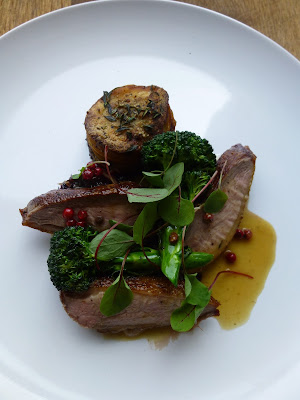
Pan-fried duck breast with Pommes Anna, broccoli, braised radicchio and a pink peppercorn sauce

It feels so good to be blogging again after a couple of weeks! Sorry about the lack of recent posts, it’s been one of those months when I’ve been rushing around and just haven’t managed to make time for writing anything. Luckily I’ve still cooked a few things, and have also been to the excellent Patty and Bun for dinner, so I have a backlog of things to post about that will hopefully be completed over the next week or so. If I don’t get distracted by yet another bbq in the park again...


I’ve also been a bit undecided in my cooking, and a bit uninspired with what to cook. The worst thing about blogging is trying to think of new recipes to cook, getting enthusiastic about an idea, going out and spending lots of money on good ingredients and then when you cook it things just don’t click, or you find out the hard way that your idea wasn’t quite good enough. Luckily this doesn’t happen too often, and I’m generally happyish with the finished result. But a couple of weeks ago I had a disaster with a langoustine and john dory recipe. Everything seemed like it would be amazing in my head, but although the finished dish was tasty it just wasn’t a complete dish, and still needed a lot of work before it   could grace these pages. To make things worse, the photos of the finished ‘dish’ were pretty awful too, so a failure all round. Still, I will learn from it, but hopefully next time my mistakes won’t be so damn expensive! 

Thankfully everything came together fine on this occasion, and I actually have a finished recipe to share. This one is very safe, using tried and tested combinations that just taste good together. Duck with something sweet tasting, an irony vegetable and some garlicky potatoes is always a winner. The only things to be concerned about when cooking this are the timings. You want the duck to be a little bit pink (which in this instance mine was, just), the potatoes to the soft in the middle and the radicchio and broccoli to just have some bite. Most things can be prepared hours in advance too, so this is ideal if hosting for a number of people. 


A quick word on the Pommes Anna. To be honest I didn’t really know what these were up until a couple of months ago when I saw them on a Michel Roux Jr programme. They’re a bit like a gratin or other vegetable stack, but pretty and individual. The layers of duck fat, leek, garlic and thyme give the cooked potatoes a beautiful richness that goes perfectly with the rest of the dish. 

Serves 2

Ingredients: 

1 free range duck crown, trimmings reserved for the sauce
Salt and pepper
20g butter

For the Pommes Anna:

2 large floury potatoes such as maris piper
1 leek, finely chopped
2 cloves garlic, finely chopped
10 sprigs thyme, leaves picked
30g butter
6 tbsp duck fat
Salt and pepper

For the braised radicchio:

1 medium radicchio, heart removed and leaves sliced finely
5 slices smoked pancetta, finely chopped
8 dates, stones removed and finely chopped
1 garlic clove, finely chopped
1 shallot, finely chopped
5 sprigs thyme, leaves picked
1 tbsp caster sugar
50g butter
Olive oil
Salt and pepper

For the sauce:

Trimmings and bones from the duck, as many as you can get. Excess fat removed.
1 shallot, finely chopped
1 leek, finely chopped
2 garlic cloves, crushed
5 sprigs thyme
1 bay leaf
1 large glass white wine
500ml chicken stock
20g butter
1 tsp pink peppercorns
Salt and pepper

For the broccoli:

4 pieces of tender-stem broccoli, trimmed
20g butter
Salt and pepper

To finish:

Baby red sorrel leaves

Turn the oven to 190ºC Fan.

First make the Pommes Anna. Heat up a medium frying pan to a moderate temperature. Melt the butter, then add the chopped leeks, garlic and thyme. Season and cook gently for about 10 minutes, or until very tender. Take off the heat. Wash and peel the potatoes, then slice them vertically very thinly, so that they are almost translucent. Using a small round cutter, cut identical circles in these slices, discarding the edges or saving for bubble and squeak. Put a sheet of greaseproof paper onto a baking tray. Put one cylinder of potato on first, then spread a little duck fat on top. Spoon a little of the leek mixture on top of this and season well. Repeat this process until the stack is about 10 potato pieces high, then top with more duck fat, seasoning and a sprinkle of thyme. Repeat so that you have two stacks of potato. Spoon the rest of the duck fat around the potatoes on the baking sheet. Put in the oven for about 40 minutes, turning to temperature down to 160ºC half way through the cooking.


While the potatoes are in the oven make the sauce. Heat a large skillet to a high heat and add the olive oil. When hot, season the duck trimmings and bones and sear on all sides until very well browned. Add the leek, shallot, garlic and thyme and caramelise well. Pour in the white wine and allow to reduce by half, then add the bay leaf, stock and a little more seasoning and mix well. Reduce the liquid again until only about 175ml remains, about 25 minutes, then strain into a small saucepan. Set aside for finishing later. 

As the sauce is reducing, make the braised radicchio. Heat a large frying pan to a medium heat and add half of the butter and a splash of oil. When hot add the chopped pancetta and cook for 7-8 minutes until starting to crisp. Add the shallot, garlic, thyme and seasoning and cook for another 3-4 minutes until tender. Now add the dates and sugar and stir the mixture well. Cook for another couple of minutes then remove from the heat for finishing later. 


Cook the duck when the potatoes have about ten minutes left to cook (although the Pommes Anna can be left in a warm oven for a few minutes until ready). Dry the duck breasts well with kitchen paper then season all over. Place skin side down in a dry, cold, non-stick pan and set the heat to medium-high. Cook for 4-5 minutes on the skin side, until the fat is well rendered and crisp. At this point put the butter in the pan and turn the duck over. Cook for another 2-3 minutes, touching with your finger occasionally to judge the cooking like you would a steak. Baste the top of the duck with the fat as you go. When cooked, remove to a board to rest for 5-6 minutes. 

While the duck is resting finish the other elements off at the same time. 


Drain most of the fat from the duck pan, but don’t clean, then put straight back onto a medium heat with the butter and a splash of water for the broccoli. When melted add the trimmed broccoli and seasoning and cook for 3-4 minutes, tossing occasionally. 

To finish off the radicchio, heat up the bacon and date mixture with the other half of the butter. When hot add the sliced radicchio and stir to combine well. Taste and adjust the seasonings so that the right balance of sweet and salty is achieved. 

Reheat the sauce gently and add the pink peppercorns and the butter. Stir well to combine and be careful not to boil, you just want it to come to heat.


Carve your duck into 3 diagonal slices and you are ready to plate up. 

First position the potato stack to the plate, then add three tablespoons of the radicchio mixture. Place one slice of duck on each mound. Top with the broccoli and spoon over the sauce. Finally scatter over some of the baby sorrel leaves. 

Tuesday, 9 April 2013

Slow roasted pork belly with crispy cod cheeks, bearnaise sauce, peas, celeriac and apple


Sorry for the lack of blog action over the past couple of weeks. I’ve been away in Devon for the past week or so, so my home cooking has taken a bit of a backseat. 

Carrying on from last blogs brunch, we all decided to set another theme which this time was set as surf and turf. Like brunch, this was a bit of a funny one for me as surf and turf isn’t normally something I decide to cook, so it was time to get my thinking cap on again! I often cook fish and add something like chorizo or bacon to add another flavour, but I wouldn’t class this in the same way as the fish is always the main part. In my mind surf and turf should share equal prominence whilst complementing each other perfectly. I also wanted to stay away from the cliche of beef and lobster. Not only does my budget not stretch as far as this too often, but I also feel like a good bit of steak doesn’t even need anything else and vice versa. It will certainly be interesting to see what everyone else comes up with, and it’s really always inspiring to chat about it on Twitter. 


White fish and pork are always good companions, but I wanted to do something a little different with this dish. I’ve always loved pork belly, but I often find that the big slab normally dished up is a bit much. Combining this with soft white fish lessons the portion size and makes a much more balanced plate of food. Pork belly also has a more subtle flavour than bacon or chorizo, so each ingredient on the plate stands out. Most flakey white fish would be a suitable pairing, and in this instance I opted to use cod cheeks. This came after a chat a while ago with local fishmonger Jon Norris, who recommended that I use them instead of monkfish in a dish that I was planning at the time. Like monkfish they have a meaty texture and can stand up to bold flavours. I also like the idea of using a less used part of the fish, especially with cod where the amount of flesh in the cheeks is too good to ignore.

Although I was pleased with the way that the dish turned out and ate, in reflection there are a few changes that I would make if cooking again. The cod cheeks were really good but I feel like the proportions were still a little uneven, so I would reduce the amount of cod a little. I would also be tempted to scrap the panko and deep fry element and gently poach the fish instead. This would reduce the richness further still, whist the crunchy texture would still be a part of the dish in the form of the pork crackling. I think in cooking sometimes you get tied-up in habit, and recently I have been breading and frying perhaps a few too many things when something a little simpler would have been better. That said, fried cod cheeks and bearnaise as a meal in itself would still be immense. 


When buying pork belly and pork in general, always buy as good quality as you can afford, and always buy a lot more than you need. I went to the brilliantly fantastic Ginger Pig in Victoria Park for this. Slow roasted pork makes incredible leftovers, and if you use 1.5kg for 4 people in this recipe you will get a fair bit. I plan on using it in a slightly healthier but equally delicious vietnamese style soup with loads of chilli, ginger and lime. 

Bearnaise is a classic french sauce that is well worth mastering. The creamy yet tangy tarragon and butter goes so well with anything from steak to white fish, and really helps tie everything together in this recipe. I used Michel Roux Jr’s version as a base for the recipe below, which as usual is easy to follow and tastes great. This original can be found here:


Serves 4

Ingredients:

For the pork belly:

1.5kg piece of pork belly
2 fennel bulbs, sliced thickly
5 garlic cloves
1 large glass dry white wine
Salt and pepper
Olive oil

For the cod cheeks:

6-8 cod cheeks - you want 3 x 1 inch pieces per person
1 large handful panko breadcrumbs
100g plain flour
1 egg, beaten
Salt and pepper
Vegetable oil for frying, about 1 litre 

For the bearnaise sauce:

4 egg yolks
1 small banana shallot, very finely chopped
4 tbsp tarragon, chopped
3 tbsp white wine vinegar
250ml clarified butter
1/2 lemon, juice only
3 tbsp cold water
Salt and pepper

For the peas:

150g frozen peas, defrosted
1/2 small banana shallot, finely chopped
1/2 lemon, juice only
1/2 clove garlic
1 tbsp tarragon leaves
Salt and pepper
Olive oil

To finish:

1 braeburn apple, cut into 1cm squares
50g celeriac, julienned
1/2 lemon, juice to squeeze over the prepped celeriac and apple
Peashoots

Preheat the oven to 140ºC.

Take the piece of pork belly out of the fridge bring to room temperature. Using a sharp knife slash through the fat at 2.5cm intervals. This will help the crackling crisp up and will also make slicing easier once cooked. Sprinkle generously with sea salt and rub into the fat so it gets between the slash marks. Drizzle with a little olive oil and set aside while you prepare the trivet. Slice the fennel and arrange with the garlic in the bottom of an oven tray. Season and toss in a little more olive oil. Place the pork belly skin side up on top and put in the oven for 2.5 hours. Add the white wine to the bottom of the oven tray half way through cooking. 


While the pork belly is on make the bearnaise sauce. Pour the white wine vinegar into a small saucepan with three quarters of the tarragon, some seasoning and the chopped shallot. Reduce by half over a low heat then take off the heat and allow to cool. If clarifying your own butter then do this at this point too and cool slightly (Roux suggests it should be tepid). When the reduction is cool add the egg yolks and whisk well. Return to a very low heat and carry on whisking continuously and making sure that the mixture doesn’t get hot enough the scramble. After about 10 minutes the eggs will have emulsified with the reduction and formed a thick frothy texture. Take off the heat and very slowly add the butter, whisking still until all the butter has been incorporated into the sauce. Pass through a sieve then add the remaining tarragon and taste. Squeeze in the lemon and season if necessary. Cover and set aside. 

Next prepare the cod cheeks. Put the flour and panko onto two separate plates and beat the egg in a small bowl. Season each element. Coat each cheek with the flour then dip in the egg before transferring to the panko plate and covering well with the breadcrumbs. Cover and set aside.

Prepare the rest of the ingredients while the pork finishes cooking. 


When the 2.5 hours is up, raise the heat of the oven to 210ºC and cook the pork for another 15-20 minutes, or until the crackling is bubbling and crispy. Take out of the oven and allow to rest while the rest of the dish is finished. 

Heat the frying oil for the cod cheeks in a medium saucepan to 160ºC. 

Heat another small saucepan with a little olive oil to a medium heat. 


When the deep frying oil is up to temperature carefully lower the cheeks in and fry for a couple of minutes until golden and crisp on the outside. Use a slotted spoon to remove them to a plate lined with kitchen paper to drain. 

While the cod cheeks are cooking fry the shallot and garlic in the other saucepan for a minute until softened. Add the peas, lemon and seasoning and cook until the peas are tender. Stir in the tarragon leaves. 

To plate up, spoon some of the bearnaise onto the middle of the plate and place a piece of the pork belly on top. Arrange the cod cheeks on the plate and add the peas. Finish with the apple cubes, some of the celeriac matchsticks and peashoots.